
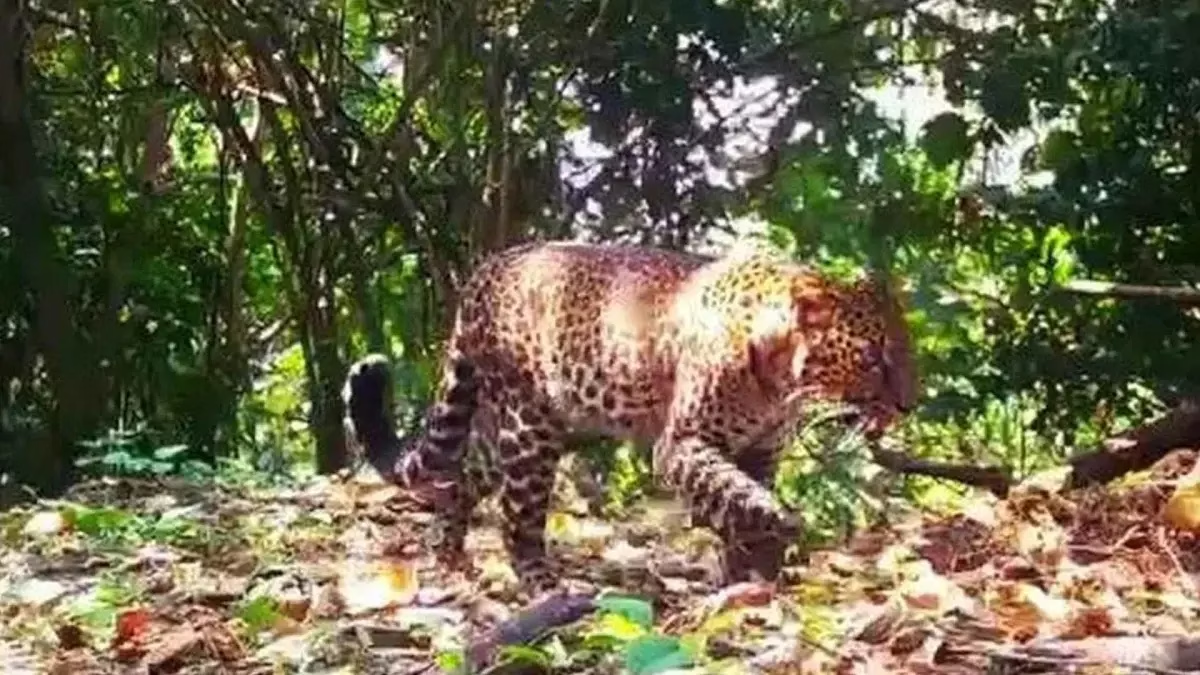
In the mist-shrouded slopes of the Sanggabuana Mountains—a natural boundary separating Karawang, Purwakarta, Cianjur, and Bogor—the silence of the forest should have been a sanctuary. However, that silence was shattered not by the roar of the jungle’s king, but by the crack of rifles and a tragic celebration.
A Javan Leopard (Panthera pardus melas), the world’s rarest leopard subspecies and the last remaining big cat on the island of Java, did not perish due to age or illness. It was slaughtered, skinned, and its meat consumed. Its exotic pelt was hidden beneath a pile of clothes, awaiting a black-market buyer who would never arrive.
This is the account of how “Sang Abah”—a title of respect given to the leopard by local residents—was betrayed by those who shared its habitat, and how a digital trail eventually led his killers to justice.
Pride in the Wrong Place
In the digital age, wildlife crimes are often exposed not on the forest floor, but on smartphone screens. Reports from the Sanggabuana Conservation Foundation (SCF)—the frontline of conservation in the region—noted that the first signs of the crime appeared on WhatsApp statuses and social media. A gruesome photograph circulated: the lifeless body of a leopard, hung by its bound feet, surrounded by men with triumphant grins.
For the researchers and conservationists who spend years maintaining camera traps just to catch a fleeting shadow of this carnivore, the image was a nightmare. It was visceral proof that the threat of poaching in Sanggabuana is a bloody reality, not just a theoretical concern.
The Pursuit of Justice
The evidence was not ignored. The SCF team moved quickly and quietly, conducting an independent investigation to verify the location and identify the suspects. Once enough evidence was gathered, they coordinated with law enforcement.
In response, the Special Crimes Directorate (Ditreskrimsus) of the West Java Regional Police launched an operation. The arrests took place in Naringgul District, Cianjur Regency—part of the critical Sanggabuana ecosystem.
During the raid, police found the suspects and the tragic remains of the leopard. “We seized a complete leopard skin. We also found homemade firearms used for the hunt,” a spokesperson for the West Java Police told the media.
Three local hunters were arrested. Despite their deep knowledge of the terrain, they chose to exploit it for slaughter rather than protection. Police reconstructions revealed a cold-blooded hunt: the perpetrators used hunting dogs to corner the leopard. Once the animal was trapped, modified air rifles and homemade guns were fired, ending the life of the apex predator.
Perhaps most distressing was the motive. While economic gain played a part—with pelts fetching tens of millions of rupiah on the black market—the act was also driven by opportunism. The animal was meticulously skinned for sale, while its meat was eaten, reflecting a profound lack of conservation education at the grassroots level.
Sanggabuana: A Fragile Stronghold
This tragedy serves as a wake-up call for conservation efforts in the Sanggabuana Mountains. Currently, the region is a “non-conservation area” (not a National Park or Nature Reserve), despite its immense biodiversity. The SCF records that Sanggabuana is a vital habitat for Javan Gibbons, Javan Hawks, and the Javan Leopard.
Because the forest is largely designated as Production or Protected Forest, human access remains largely unrestricted, significantly increasing the risk of human-wildlife conflict and illegal poaching.
Under Law No. 5 of 1990 on the Conservation of Living Natural Resources and their Ecosystems, the perpetrators face up to five years in prison and a maximum fine of IDR 100 million. However, legal action is only one part of the solution. There is an urgent need to officially designate Sanggabuana as an integrated conservation area or a National Park—a move long advocated by environmentalists and local authorities to ensure stricter protection.
The arrests in Cianjur send a clear message: there is no hiding place for those who prey on endangered wildlife. Yet, this victory remains bitter. One more Javan leopard has been permanently removed from a population already in a critical state—estimated at only a few hundred individuals left in the wild.
The death of the leopard in Sanggabuana is a dire alarm. It serves as a reminder that without vigilant oversight, community education, and a formal change in the area’s protection status, the “Guardian of the Forest” will continue to be dethroned, leaving behind a silent and hollow wilderness.
- The Death of the Javan Leopard: The Fallen Guardian of Sanggabuana Forest
- Sumatra’s Forests are Wounded: Restoration Requires More Than Just Permit Revocations
- Testing the Power of Indonesia’s Anti-SLAPP laws in the case of activists Munif and Dera
- From Waste to Blessing: Gayamsari Residents Turn Organic Waste into New Resources
- The Story of Maluku’s Jambula Mamas and Their Fight for a Living Coastline
- Jatiwangi in the Shadow of Industry and the Dream of an Environmentally Sovereign Terracotta