
Close your eyes. Picture “paradise.”
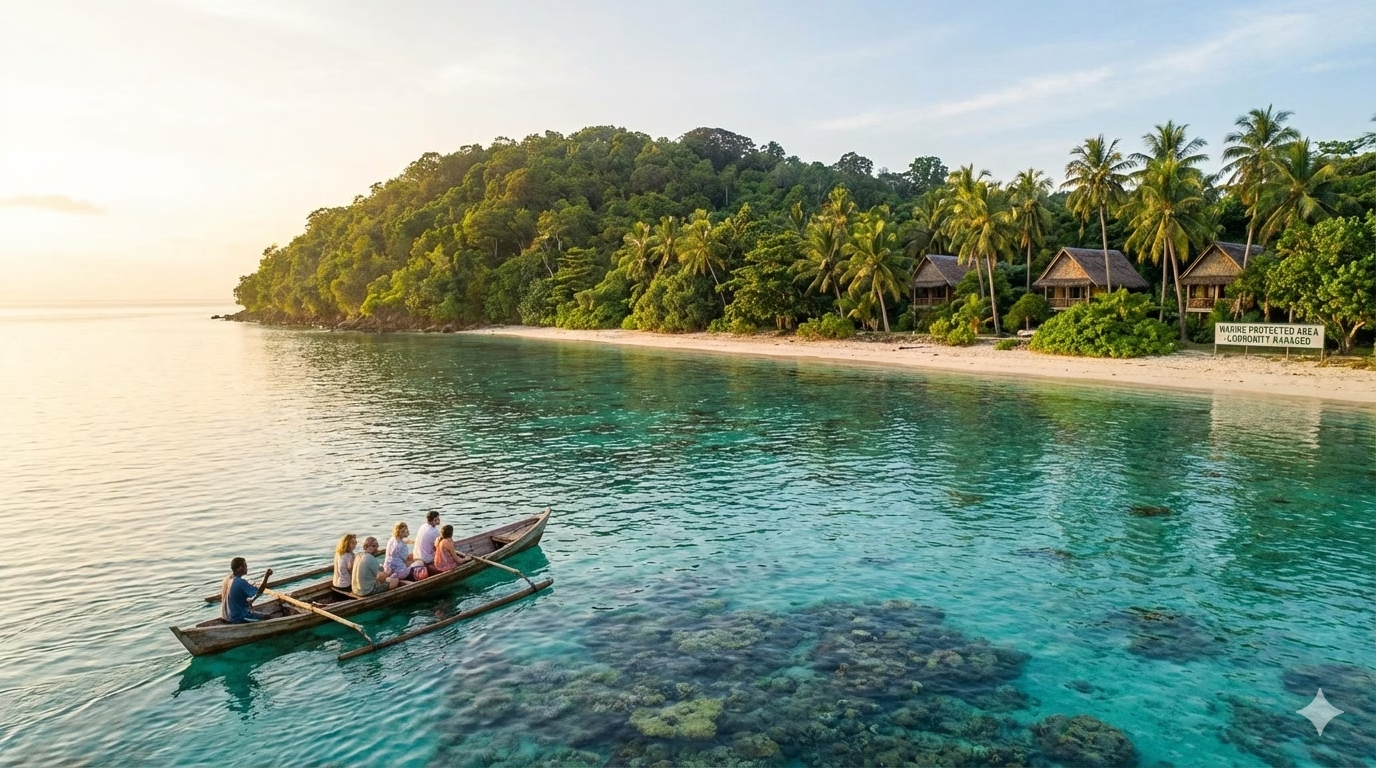
For most of us, the image is universal: a spine of white sand curving into water so clear it looks like liquid turquoise. Palm trees leaning precariously over the tide, and beneath the surface, a riot of color as fish dart through complex coral cities.
Now, open your eyes to the reality facing dozens of coastlines globally. The color is draining away, leaving bleached white coral skeletons. The sand is choked not by driftwood, but by a colorful confetti of microplastics. The silence is broken by the relentless thrum of jet skis and the construction of another high-rise hotel sinking its concrete pillars into fragile dunes.
For decades, we loved our coasts to death. Tourism, the world’s largest industry, treated beaches as infinite resources—commodities to be consumed rather than ecosystems to be treasured. The data on this approach is grim: scientists estimate we have lost half of the world’s coral reefs in the last 30 years, much of it accelerated by coastal development and unregulated human traffic.
But the narrative is changing. In pockets of the world, a quiet resistance is forming. It is led by local fishermen turned guides, indigenous communities asserting their rights, and travelers who realize their wallets are powerful weapons. This is the story of ecotourism—not as a marketing buzzword, but as a desperate, data-backed defense line for our planet’s edges.
The Failure of the “Sun, Sea, and Sand” Model
To understand the solution, we must understand the failure. Traditional mass coastal tourism operates on a model of extraction. Large resorts often import food, labor, and materials, while the profits—up to 80% in some Caribbean markets—leak out of the host country to foreign corporations.
The local community is left with low-wage jobs and a degraded environment. Mangroves, nature’s crucial storm barriers and fish nurseries, are bulldozed for sea views. The very assets that attract tourists are destroyed by their arrival. It was a story with a tragic ending, played out on loop from the Mediterranean to Southeast Asia.
Then, the script flipped.
The Shift: When Value Replaces Volume
Ecotourism introduced a radical idea: what if a living shark was worth more than a dead one? What if a standing mangrove forest generated more long-term wealth than a shrimp farm?
This wasn’t just sentimental thinking; it was economic hardball.
Let us travel to Raja Ampat, Indonesia, the crown jewel of the Coral Triangle. Fifteen years ago, this marine Eden was under siege by dynamite fishing and shark finning. The reefs were beginning to silence.
The shift began when local communities, partnered with conservation NGOs, established Marine Protected Areas (MPAs). They made a calculated gamble: if they stopped fishing in critical zones, tourists would pay a premium to dive there.
The data tells the story of their success. Since the establishment of these community-guarded no-take zones, fish biomass in some areas of Raja Ampat has increased by over 250%. Sharks, once hunted, now generate an estimated $1.9 million annually in diving tourism revenue for Palau, a similar island nation, proving that a live creature generates recurring revenue year after year, versus a one-time sale at a fish market.
In Raja Ampat, the tourism fees don’t disappear overseas; they fund the patrol boats that guard the reefs from poachers. The poachers, often locals with few other options, are frequently retrained as boat captains and dive guides. The destroyers became the guardians because the economics made sense.
The Power of the Pledge: Palau’s Ultimatum
Ecotourism isn’t just about where you stay; it’s about the mindset you bring.
In the Pacific nation of Palau, they realized their archipelago was crumbling under the weight of visitors who didn’t understand the fragility of the ecosystem. They didn’t just need fewer tourists; they needed better ones.
In 2017, they changed the narrative with the “Palau Pledge.” It is not a brochure; it is an entry visa stamped into every passport. To enter the country, you must sign a mandatory promise to the children of Palau to “tread lightly, act kindly, and explore mindfully.”
It was a psychological masterstroke, turning a vacation into a contract of stewardship. Data following the initiative showed a marked increase in tourist compliance with environmental regulations. It proved that when you treat travelers as partners in conservation rather than just consumers, they rise to the occasion.
The Local Vanguard
The true heroes of this story aren’t the tourists, but the coastal communities living on the front lines of climate change.
In Costa Rica, the Osa Peninsula used to be plagued by illegal gold mining and logging. Today, former miners are some of the world’s best naturalists. They realized that ecotourism, centered on their staggering biodiversity, provided a stable income that didn’t require poisoning their rivers with mercury.
When tourism is locally owned—through homestays, locally guided tours, and community cooperatives—the “leakage” stops. The money stays to build schools, improve sanitation, and, crucially, convince the next generation that their natural heritage is their most valuable asset.
The Traveler’s Choice: Being Part of the Story
We are at a crossroads. The data is clear: coastal ecosystems are resilient, but they have a breaking point.
Genuine ecotourism is not about “greenwashing”—slapping an eco-label on a hotel because they don’t change your towels daily. It is about verifiable low-impact travel that offers high engagement with local culture and directly funds conservation.
When you choose a destination that limits visitor numbers, you are voting for sustainability. When you pay a park fee to enter a marine sanctuary, you are paying a salary for a ranger. When you stay in a locally owned lodge, you are securing the economic future of a family that relies on a healthy coastline.
The story of our coasts is still being written. We can choose the ending where paradise is lost to concrete and silence. Or, we can choose the ending where we become the guardians, ensuring that the vibrant, chaotic beauty of the coastline remains for generations to come. The choice is made every time we book a ticket.