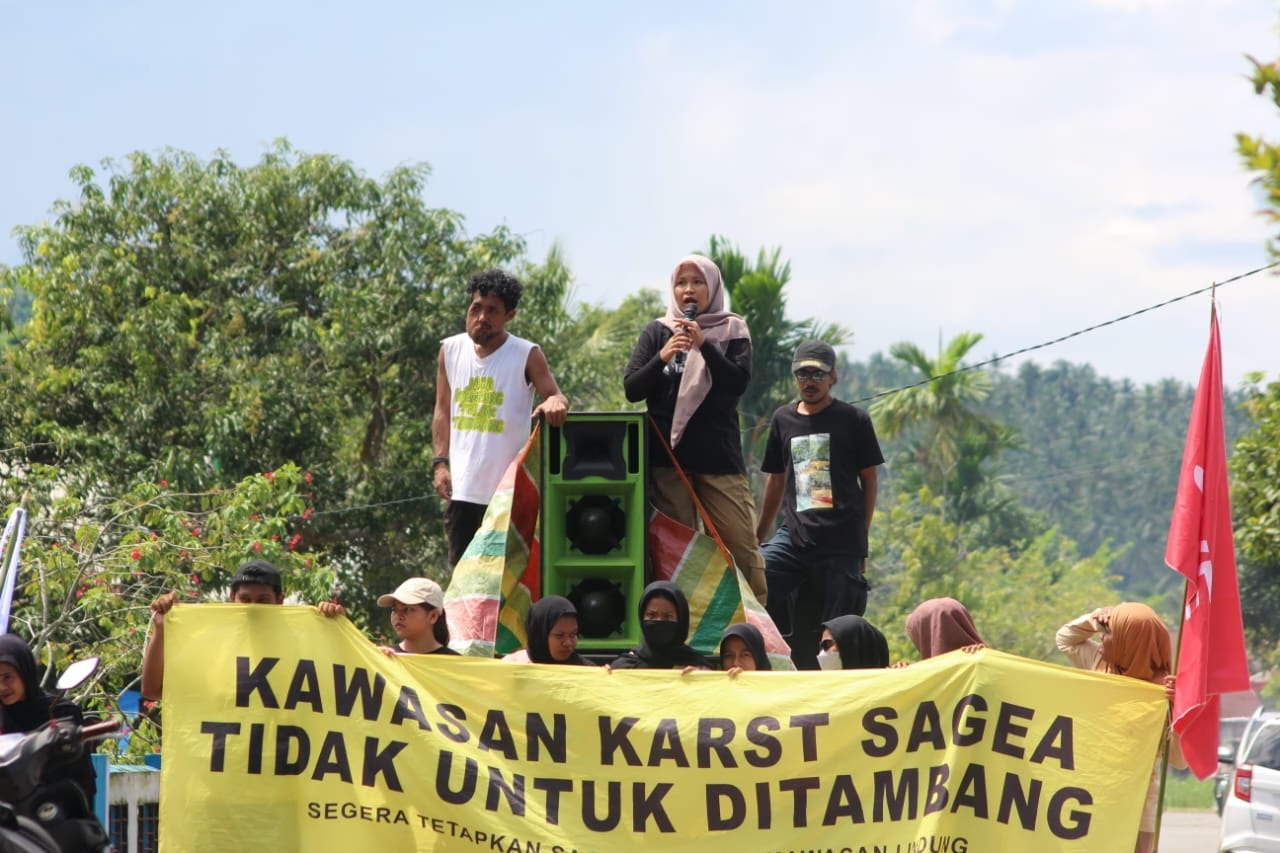
In the villages of Sagea and Kiya, located in the heart of North Halmahera, the spirit of resistance shows no signs of waning. For years, the local community has stood firm against the encroaching nickel mining operations that threaten their ancestral lands. However, this fight for environmental survival has met with a harsh response: the systematic criminalization of those who dare to speak out.
The conflict escalated recently when PT Zhong Hai Rare Metal Mining Indonesia reported 14 local residents to the authorities. The Save Sagea Coalition, a grassroots movement advocating for villagers’ rights, views this legal action as a blatant attempt to intimidate and silence the community.
The Mining Advocacy Network (JATAM) echoes this sentiment, stating that the company’s legal maneuvers send a chilling message to anyone opposing extractive industries. In the eyes of the law and the corporation, villagers who are simply protecting their primary sources of water and food are being reframed as “disruptors” of national investment.
“If criminalization is the chosen path to suppress resistance, it only proves the true character of the extractive industry and a state that prioritizes investment over the safety of its citizens and the preservation of the environment,” JATAM asserted in a statement.
An Ecological Heart Under Siege
The resistance in Sagea and Kiya is not merely about land ownership; it is a fight for ecological survival. The region is home to the Sagea Karst and the Legaleyol Lake—vital natural landscapes that serve as the community’s “ecological heart.” These areas provide essential water sources, support local agriculture, and maintain the region’s biodiversity.
For the residents, Sagea is not a “blank spot” on a map to be carved up for global supply chains. It is a living ecosystem where:
- Water sources sustain thousands of lives.
- Forests act as natural buffers against climate change and erosion.
- Gardens and plantations form the backbone of the local economy.
- Cultural heritage is deeply intertwined with the landscape, passed down through generations.
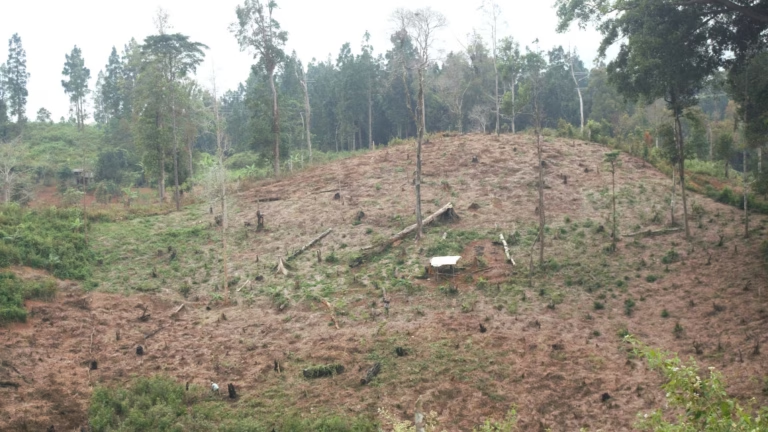
The expansion of nickel mining—often driven by the global demand for “green energy” and electric vehicle batteries—poses a direct threat to this delicate balance.
A Call for Justice
The local community and environmental advocates are now calling for immediate government intervention. They are demanding that the North Maluku Provincial Government and the Central Halmahera Regency issue formal recommendations to revoke the Mining Business Licenses (IUP) of two major players in the area: PT Zhong Hai Rare Metal Mining Indonesia and PT First Pacific Mining.
Furthermore, they are urging the Ministry of Energy and Mineral Resources (ESDM) to take decisive action by shutting down these operations entirely to prevent further environmental degradation and social conflict.
The situation in Sagea highlights the dark side of the global energy transition. As the world rushes toward decarbonization, the demand for nickel has turned regions like North Maluku into “sacrifice zones.” The Sagea case serves as a stark reminder that “green” minerals should not come at the cost of human rights and the destruction of irreplaceable karst ecosystems.
For the people of Sagea and Kiya, the struggle continues. They are not just fighting for their backyard; they are fighting for the right to exist in harmony with a landscape that has sustained them for centuries.
- Traditional Dish Adds To Threats Facing Indonesia’s Carnivorous Plants
- The Blue Carbon Paradox: Indonesia’s Ecological Gamble on World Seagrass Day 2026
- West Java Besieged by Indonesia’s Deadliest Coal Power Plants
- Green Illusions: The Failing Promise of Indonesia’s Biomass Energy Plantations
- The Dark Shadow Behind the Copper Glint: Locking Papua’s Fate into Ecological Disaster
- Criminalized for Their Land: The Struggle of Sagea Residents Against Nickel Mining in North Maluku