
Daswarsya is in the rainforest hunting carnivores, but not dangerous ones. The 60-year-old has brought me to the forest at the edge of Lake Lingkat, near Lempur village in Jambi Province, Sumatra. In the shade, he bends to scan the area for pitcher plants, known in Indonesia as kantong semar.
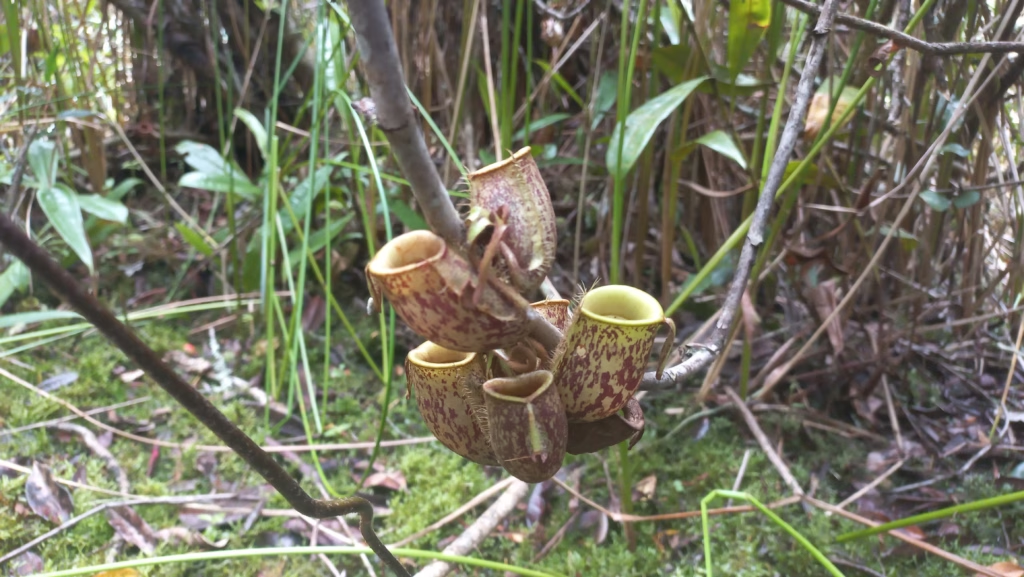
These carnivorous plants are still abundant today. Some grow in clusters on the forest floor. Others hang from tree branches. One by one, Daswarsya picks around 30 of the plants and places them in a cloth bag.
“Let’s just take a little for making lemang,” he says.
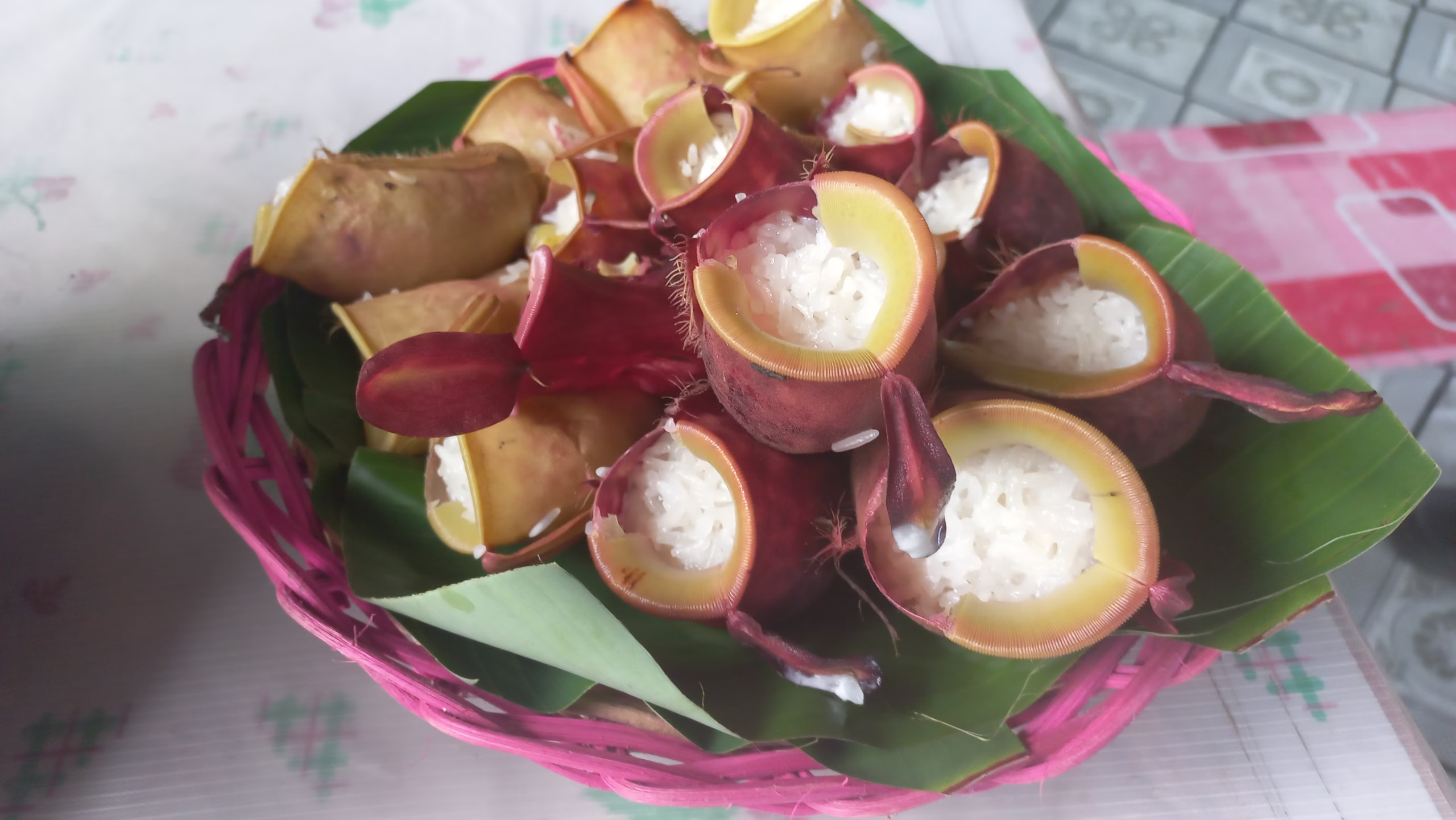
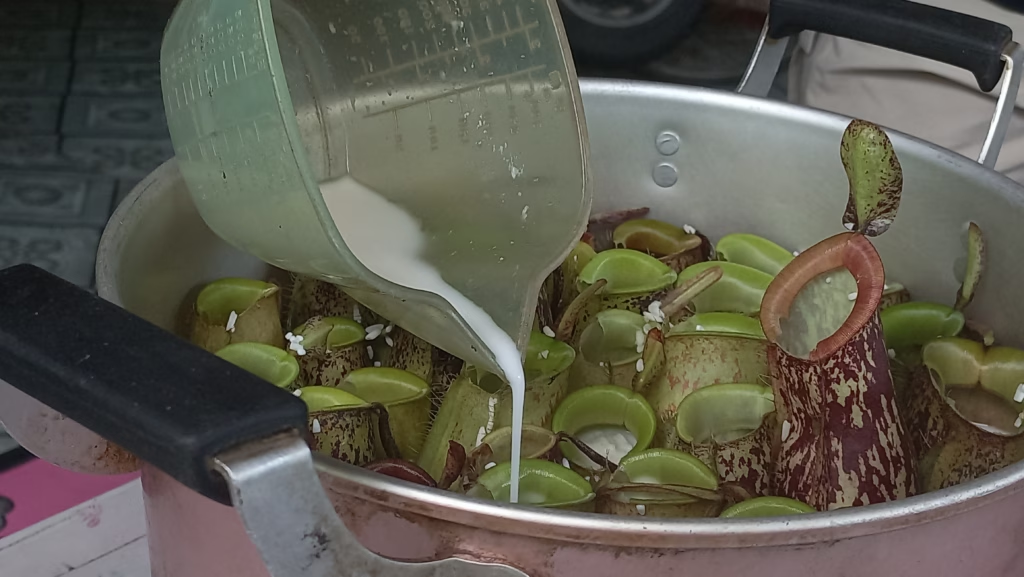
Daswarsya is referring to a traditional food made from glutinous rice, coconut milk and salt. Usually, it is cooked in bamboo. But here in Kerinci Regency of Jambi province, people instead place the ingredients in pitcher plants, which they then steam, giving the lemang a distinctive aroma and flavour.
Daswarsya is concerned that the old tradition has turned into a modern threat for the pitcher plants, alongside habitat loss, illegal harvesting for the ornamental plants trade, and climate change. And while Indonesia’s legal framework offers protection to some of the country’s pitcher plants, enforcement is a challenge — and the plant used to make lemang is not among those covered by current regulations.
Sumatra: Pitcher plant paradise
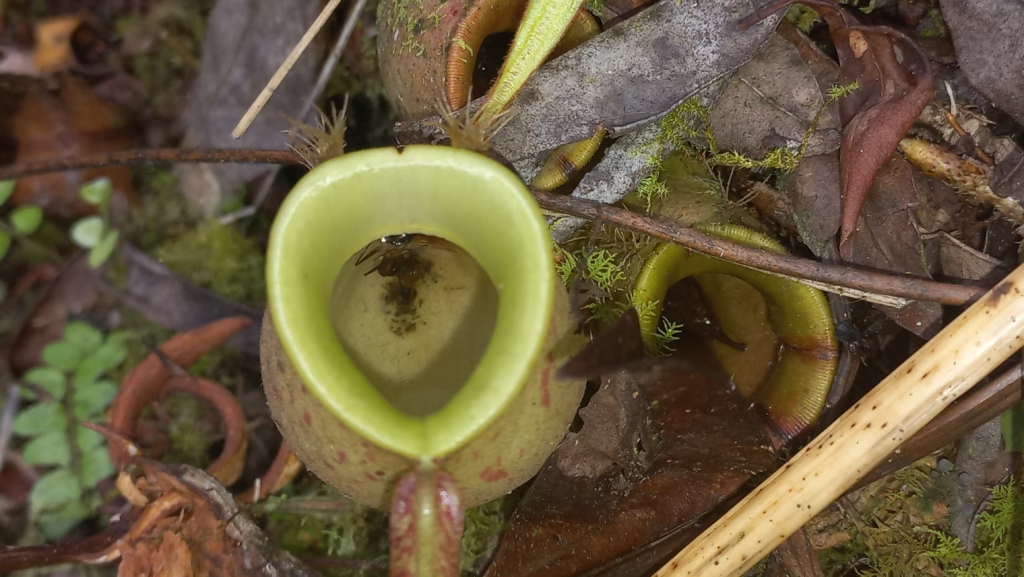
Pitcher plants (Nepenthes species) grow as climbers on trees and other plants. They have modified leaves that form cup-like or tubular structures filled with fluid — locals call them monkey pots. Nectar produced around the rim of the cup lures insects and other small animals, which slip into the cup and drown. The plant then digests them.
Indonesia is the global center of diversity for these plants, with at least 68 of the 170 species described worldwide. According to data from the National Research and Innovation Agency (BRIN), most of these carnivorous plants are found in Sumatra (34 species), with smaller numbers in Kalimantan (22 species), Sulawesi (11 species), Papua (11 species), Maluku (3 species), and Java (3 species).
The species that people in Kerinci Regency cook lemang in is Nepenthes ampurallia. Its pitchers resemble round jars that are 5-10 centimetres tall, and either light green or green with red spots. This species grows in shady places, thriving under the protective cover of rainforest trees. The Lempur forest where Daswarsya took me is an ideal place to find it.
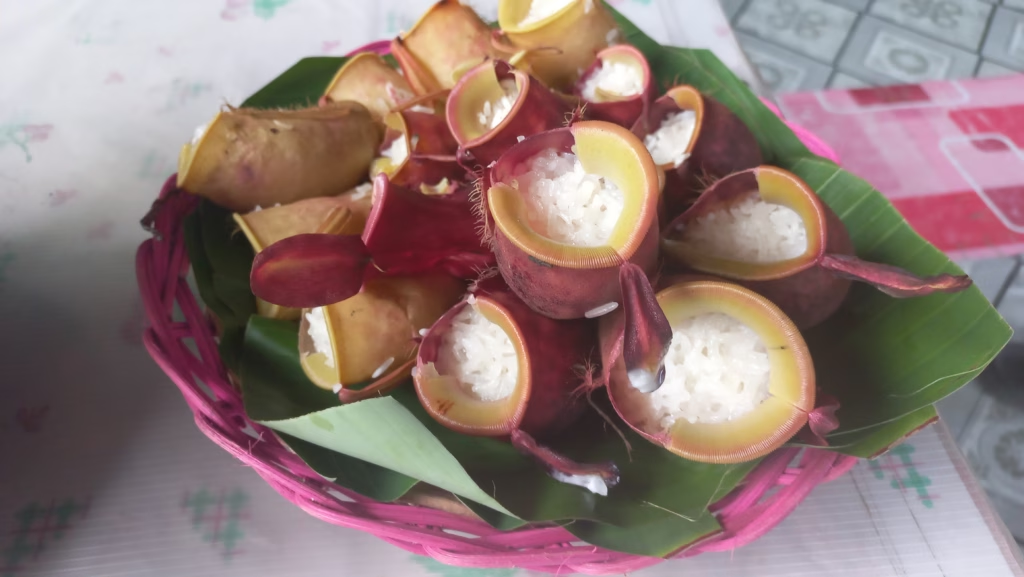
Back at his house, three kilometres away, Daswarsya prepared the plants then stuffed the lemang ingredients into them ahead of cooking. Village elders told him that the practice of making lemang in pitcher plants began in the 17th century, and has been passed down from generation to generation ever since. After about an hour of cooking, Daswarsya brings a tray of cooked lemang kantong semar and serves it with sweet srikaya sauce.
Rising demand for pitcher plant lemang
“In the past, this dish could only be enjoyed during certain events, such as traditional ceremonies or Eid al-Fitr,” said Daswarsya.
Today he fears that the pitcher plants are being overharvested to meet growing demand for lemang kantong semar from tourists. Sungaipenuh City is only37 kilometres away and its residents increasingly visit Lempur and the lake. Some home-based cake sellers in Kerinci Regency advertise this food through social media networks. To meet demand, local people take pitcher plants directly from the forest — there is no cultivation of these plants, or conservation of the wild population.
Daswarsya laments that pitcher plants are now used without traditional ceremonies, and that people are unaware that the plants are rare. He says a lack of supervision and awareness campaigns by the government has encouraged the harvesting of Nepenthes ampurallia.
In 2018, the Indonesian Minister of Environment and Forestry issued a regulation that added 59 species of pitcher plants to the country’s list of protected species. They include six species classified as ‘critically endangered’ in the International Union for Conservation of Nature’s Red List of Threatened Species, and several others classified as ‘endangered’. Nepenthes ampurallia is not one of the protected species.
“If it is not regulated, it could be depleted, and we are afraid it will become extinct,” says Daswarsya, who is also the chairman of the village’s Forest and Environment Care Forum. “Therefore, the harvesting of pitcher plants must be limited. I hope that the residents will only harvest it for traditional ceremonies and special occasions.”
Wanted: Regulation and education
Daswarsya’s village lies within an exclave of the Kerinci Seblat National Park (TNKS) – a UNESCO-recognised world heritage site that has 15 Nepenthes species. Nearly half of these species are protected, says Dian Indah Pratiwi, a Forest Ecosystem Control Officer at the TNKS Office.
“But because research on Nepenthes is still limited in our area and we find it difficult to identify them, we are concerned that the species used as a wrapper for lemang is a protected species,” said Dian Indah Pratiwi, Forest Ecosystem Control Staff (PEH) at the TNKS Center.
Tri Warseno, a researcher at the Centre for Biosystematics and Evolution Research at the National Research and Innovation Agency (BRIN)–based in Jakarta, says the collection of pitcher plants in their natural habitat needs to be regulated and managed wisely.
“Uncontrolled hunting or harvesting in the wild can undermine conservation efforts,” says Warseno. He points out that overharvesting to meet growing demand from tourism threatens to make the pitcher plants hard to find or even locally extinct. This would ultimately threaten both traditional and commercial uses of the plants for making lemang.
Warseno says it is important to educate local people about Nepenthese and the risks of overharvesting. He says the TNKS can set quotas for harvesting the plants outside of conservation areas, and that community members should be taught how to cultivate pitcher plants so they do not need to harvest them from their habitat.
Disappearing habitat
Overharvesting for lemang production is just one of several threats facing Sumatra’s pitcher plants. In December 2025, Daswarsya reported that part of the Hulu Air Lempur customary forest in the TNKS buffer zone had been illegally converted into coffee and cinnamon plantations. It was an area of forest where pitcher plants had grown.
“We are sad to see our forest being encroached upon, which could lead to the disappearance of the unique pitcher plant,” he says.
Pitcher plants are highly vulnerable to habitat loss and fragmentation because they only grow in particular conditions. Nursanti, a forestry lecturer in the University of Jambi’s Faculty of Agriculture, explains that Nepenthes species have adapted to grow in places where the soil is barren or lacks nutrients, such as acidic peat swamps and heath (kerangas) forests.
Under these conditions, these plants are still able meet their nutritional needs, especially for protein, by trapping and digest insects with their unique pouches. But across Sumatra, deforestation, mining and the expansion of oil palm and industrial forest plantations are destroying the natural habitat of Nepenthes.
Statistics from the Ministry of Forestry in 2025 show that net deforestation in Sumatra reached 78,030 hectares. About 44 per cent of deforestation in Indonesia occurs in Sumatra, with the highest rates in the provinces of Riau, followed by Aceh, Jambi, North Sumatra, and West Sumatra. Greenpeace Indonesia estimates that Sumatra now has only 10 to 14 million hectares of natural forest, or less than 30 per cent of the island’s total area.
“If the forest ecosystem is disturbed, the existence of pitcher plants is greatly threatened, and if the ecosystem is damaged, the presence of Nepenthes is very difficult to restore,” says Nursanti.
Plant trade and climate change
Harvesting of Nepenthes for making lemang is restricted to Kerinci Regency, but all across Sumatra these plants are also taken by poachers supplying the trade in ornamental plants. Their unique and visually appealing forms make pitchers plants highly desirable among plant collectors.
Poachers will target rare species especially, because of their high value. One Malaysian online nursery is selling seedlings of Nepenthes rigidifolia — which occurs naturally only in Sumatra and is critically endangered — for US$86 each, or approximately IDR1,300,000.
All Indonesian species of Nepenthes are included in Appendix II of the Convention on International Trade in Endangered Species of Wild Fauna and Flora (CITES). This means they can only be traded internationally under certain conditions and with specific permits. But the small size of the plants makes it easy for traffickers to smuggle them, raising concerns that poaching will cause drastic declines in their populations.
According to Warseno at the National Research and Innovation Agency, climate change and rising temperatures can also affect the ability of pitcher plants to adapt and survive. If temperatures rise, it will be very difficult for it to thrive, he explains.
The many values of Nepenthes
The commercial benefits to harvesters of Nepenthes — whether for the international plant trade or for making lemang — are clear. But these plants also have other values, says Warseno.
“The pitcher plant or Nepenthes also has an ecological role, namely as a natural insect pest control in its habitat,” he says. “It helps balance the food chain and reduces the potential for insect pest outbreaks in its ecosystem.”
“The presence of Nepenthes in an area can be used as an indicator of forest health and can show that the ecosystem is relatively healthy and has not been significantly polluted,” he adds.
Warseno says the plants have educational value, because of their appearance, evolutionary uniqueness and ability to prey on animals to obtain nutrients. He points out that pitcher plants have long been used in traditional medicine, but few people know about this.
“But if the plant itself becomes extinct and has not been studied, how can we know its benefits?” he asks. “That is why it is very important to protect it.”
*This story is supported by Internews’ Earth Journalism Network.
Indonesian environmental journalism needs your support. Help Ekuatorial.com continue providing crucial reporting on nature and climate issues.
- Traditional Dish Adds To Threats Facing Indonesia’s Carnivorous Plants
- The Blue Carbon Paradox: Indonesia’s Ecological Gamble on World Seagrass Day 2026

- West Java Besieged by Indonesia’s Deadliest Coal Power Plants
- Green Illusions: The Failing Promise of Indonesia’s Biomass Energy Plantations
- The Dark Shadow Behind the Copper Glint: Locking Papua’s Fate into Ecological Disaster
- Criminalized for Their Land: The Struggle of Sagea Residents Against Nickel Mining in North Maluku