
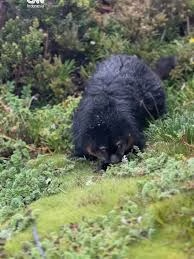
Recent viral footage on social media has brought a rare and enigmatic creature into the global spotlight: the Sulawesi Bear Cuscus (Ailurops ursinus). While its teddy-bear-like appearance has charmed many, conservationists warn that these rare sightings are not a sign of a thriving population, but rather a symptom of the intense pressure and habitat loss facing Sulawesi’s endemic wildlife.
Listed as Vulnerable on the IUCN Red List, the Sulawesi Bear Cuscus is a unique marsupial found nowhere else on Earth. Its survival is currently hanging by a thread due to a combination of deforestation, habitat fragmentation, and illegal hunting.
The Shy Canopy Dweller
Unlike its distant cousins in Australia, the Sulawesi Bear Cuscus has adapted to life high in the tropical rainforest canopies of Indonesia. Its thick, dark grey-to-brown fur gives it a bear-like appearance, but taxonomically, it is a marsupial, closely related to phalangers.
Equipped with sharp curved claws and a powerful prehensile tail, this slow-moving mammal spends most of its life navigating the heights of the forest. They are notoriously shy and quiet, often spending their days resting or sleeping in the treetops, which makes them incredibly difficult for researchers to track and monitor.
Data from the South Sulawesi Natural Resources Conservation Agency (BBKSDA) highlights the fragility of their existence: of the 26 plant species present in their natural habitat, only about 15% serve as a viable food source for the cuscus. This highly specialized diet means that even minor disruptions to the forest ecosystem can have devastating effects on their survival.
A Habitat Under Siege
The primary driver behind the recent sightings is the shrinking of their world. As forests are converted into agricultural land, settlements, and industrial zones, these arboreal animals are being forced out of their secluded canopy homes and closer to human-populated areas.
According to the IUCN, the loss of habitat is the greatest threat to the species. When the towering trees they depend on are felled, the “sky bridges” they use to move and find food disappear. This isolation not only limits their access to nutrition but also narrows the gene pool, as mating pairs—usually solitary except during breeding season—find it harder to reach one another.
The Hidden Threat of Poaching
While habitat loss remains the most urgent concern, illegal wildlife trade and hunting still pose a significant risk. Because the Sulawesi Bear Cuscus is naturally slow and silent, they are easy targets once discovered. However, their elusive nature in the deep forest has historically been their best defense—a defense that is now crumbling as humans encroach deeper into the wilderness.
A Call for Conservation
The viral emergence of the Sulawesi Bear Cuscus serves as a stark reminder of the ecological crisis unfolding in Indonesia’s forests. For this endemic species to survive, local and international conservation efforts must focus on:
- Strict Habitat Protection: Halting the conversion of lowland rainforests into industrial or agricultural sites.
- Reforestation: Restoring the specific plant species that the cuscus relies on for food.
- Enhanced Monitoring: Utilizing better technology to track and protect the remaining populations in the wild.
The Sulawesi Bear Cuscus is more than just a viral sensation; it is a flagship species for the unique biodiversity of the Wallacea region. Protecting them means protecting the very heart of Sulawesi’s natural heritage.
- An Urgent Plea for International Aid from the Heart of Indonesia’s Toxic Haze Crisis
- How the Savannas of Nusa Tenggara Became Indonesia’s New Epicenter for Land Fires
- Why World Mangrove Day Requires Action, Not Just Rhetoric?
- Fair Finance Asia Promotes Collaboration on Energy Transition
- The Smoke Crisis and Methane Time Bomb at Jatiwaringin Landfill
- One Year Since the Maba Sangaji Forest Tragedy