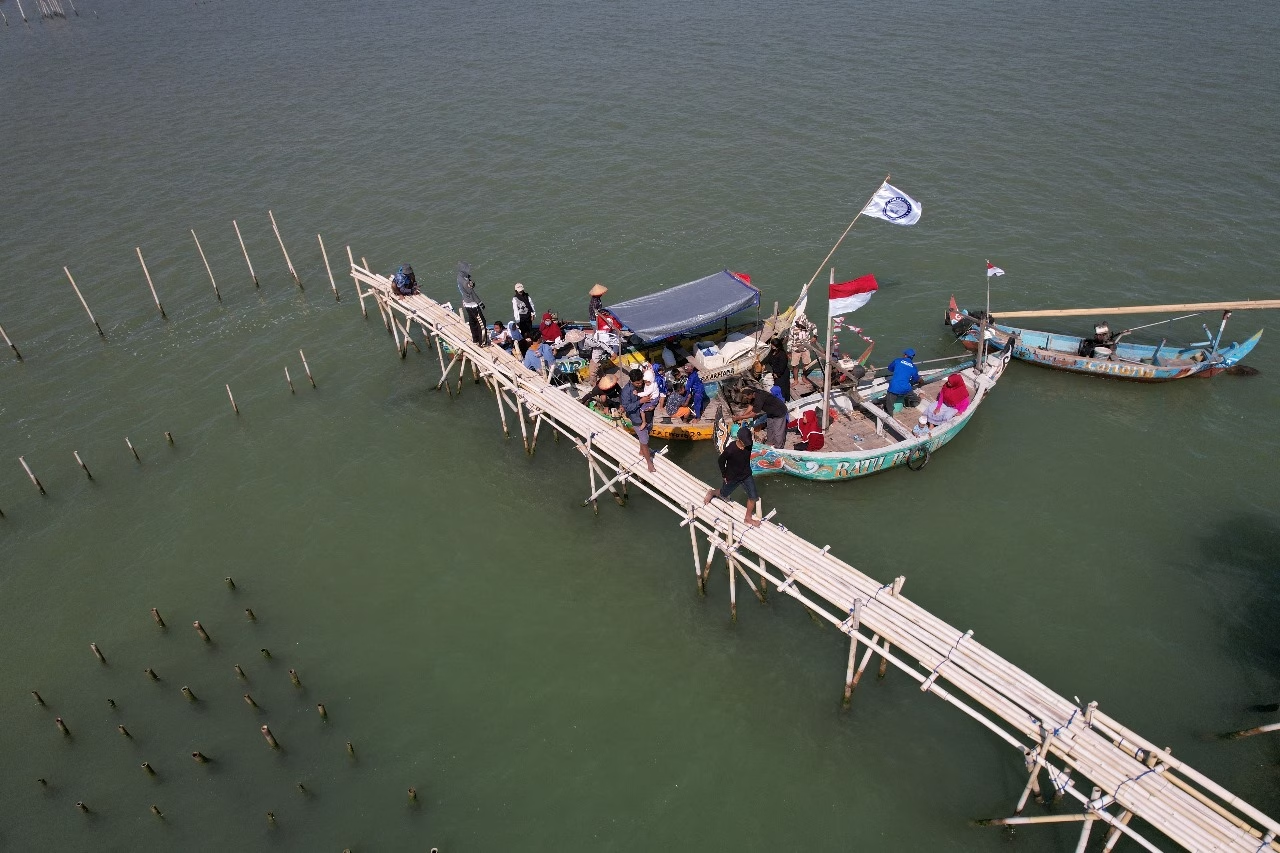
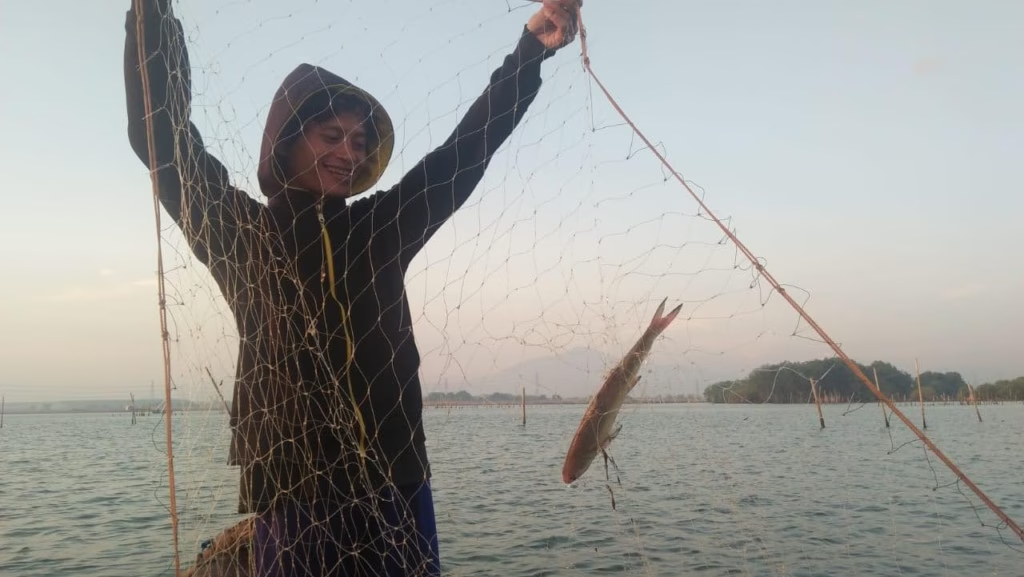
At 3 a.m. in the waters of Semarang, while most are still asleep, Ahmad Marzuki is already cutting through the waves with his nets. There are mornings when the catch is enough to sustain his family and community, but those lucky days are becoming increasingly rare. “The rising temperatures have really affected my work,” he laments. A few years ago, bringing home 20 to 25 kilograms of fish a day was easy, but now, catching even four or five kilograms feels like a struggle.
The ocean’s dwindling bounty is not the only vulnerability Ahmad faces. In 2019, flood-control projects forced him and 164 others to leave their homes. They were moved into “temporary” housing that, years later, remains temporary.
“In Indonesia, we say fishermen are the pillars of protection,” Ahmad explains. “We provide protein for families. Yet small communities like ours always seem to suffer first”. This injustice drove Ahmad and his community to organize, demanding fair access to the sea and safer housing. Although his efforts have been persistent, progress has been slow. “Sometimes it feels like our voices don’t reach very far,” he reflects.
A glimmer of hope emerged from an unexpected direction. Through a community event organized by a local NGO, Ahmad was invited to participate in the Global Citizens’ Assembly on Food Systems and Climate. This global initiative brings together everyday people to share how climate change is reshaping the way they grow, find, and rely on food.
At first, Ahmad thought the event would just be a way to stay occupied during the lean season when work for fishermen was scarce. However, he was selected through sortition—a lottery system designed to produce a representative global group.
For seven weeks, from January to March 2026, Ahmad joined 105 participants across time zones. In that virtual space, geographical boundaries dissolved. He sat in discussions with a farmer from Uganda, a student from Brazil, and an engineer from Turkey. In the early weeks, participants learned from scientists, policy experts, and indigenous leaders about how food systems contribute to the climate crisis.
For Ahmad, this process was eye-opening. “I never thought about environmental damage coming from the food we grow and eat,” he says. He admitted that he previously only thought of pollution from cars or factories as the culprit.
In the forum, Ahmad was not just a listener. He persistently voiced the realities of the coast in discussions that were initially dominated by agricultural issues. “I understood that, but I wanted them to also see the challenges we face as fishermen. Our struggles are different, but connected,” he recalls.
The long debates culminated in a strong consensus. Twenty-two Calls to Action were agreed upon by more than 80 percent of the Assembly. These proposals included technical reforms like clearer sustainability labeling and more structural changes like the redistribution of subsidies and the preservation of local food traditions.
The initiative’s echo even reached the government of Brazil, which invited the Assembly to present these recommendations at international meetings. This provides a space for coastal citizens like Ahmad to share their lived experiences in decision-making forums that traditionally exclude them. However, for Ahmad, true change is not just measured by global diplomacy documents, but by concrete action on the shoreline.
Upon returning to Semarang, he brought that global spirit home. He is now working with others to restore coral reefs and protect seagrass beds, recognizing their vital role in sustaining marine ecosystems. Under the increasingly challenging coastal sky, Ahmad holds onto hope. “I hope everyone becomes more aware of the environment,” he says. “Governments need to take responsibility, and communities need to take action”.
- An Urgent Plea for International Aid from the Heart of Indonesia’s Toxic Haze Crisis
- How the Savannas of Nusa Tenggara Became Indonesia’s New Epicenter for Land Fires
- Why World Mangrove Day Requires Action, Not Just Rhetoric?
- Fair Finance Asia Promotes Collaboration on Energy Transition
- The Smoke Crisis and Methane Time Bomb at Jatiwaringin Landfill
- One Year Since the Maba Sangaji Forest Tragedy