Behind the luxury of a perfume bottle displayed in global fashion boutiques lies a long journey that begins with soil-stained hands. Far from the glamour of modern cosmetic laboratories or the world’s runways, farmers in rural Sulawesi spend their days tending to a distinctively aromatic plant that serves as the backbone of the fragrance industry: patchouli.
Since the 19th century, this commodity has placed Indonesia in a highly strategic position, supplying approximately 80 percent of the world’s total patchouli demand. However, an irony has persisted for decades: the stories of sweat and hard work from these grassroots farmers are rarely heard on the global beauty stage. They are often reduced to lifeless statistics in export reports.
For ParagonCorp—a purposeful beauty tech company housing major brands like Wardah, Kahf, Emina, and Earth Love Life—breaking this chain of obscurity is imperative. Sustainability is no longer just about eco-friendly packaging; it is about tracing justice and welfare back to the very source.
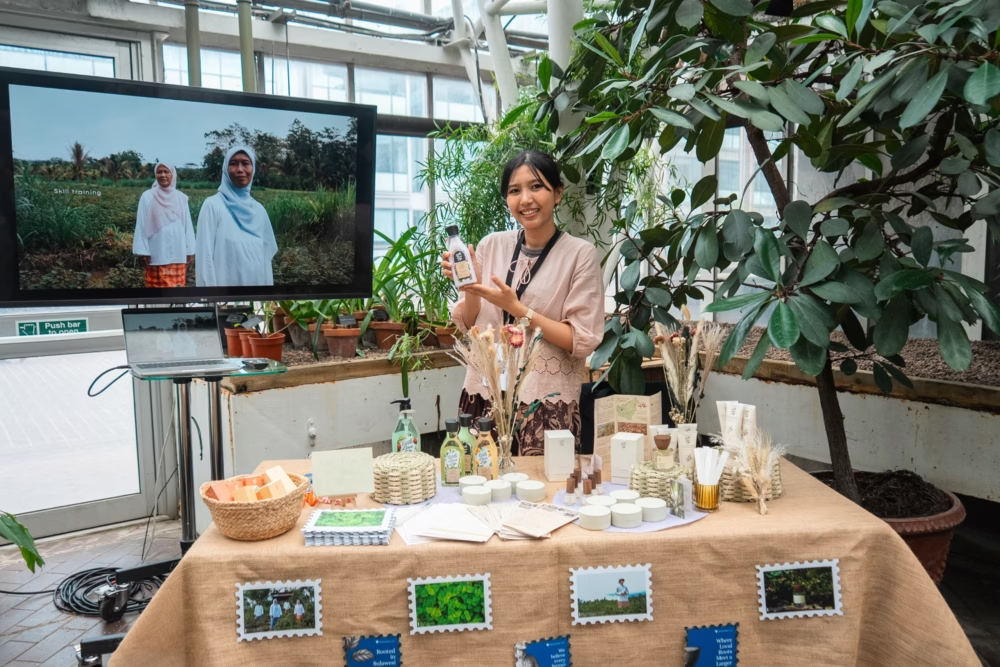
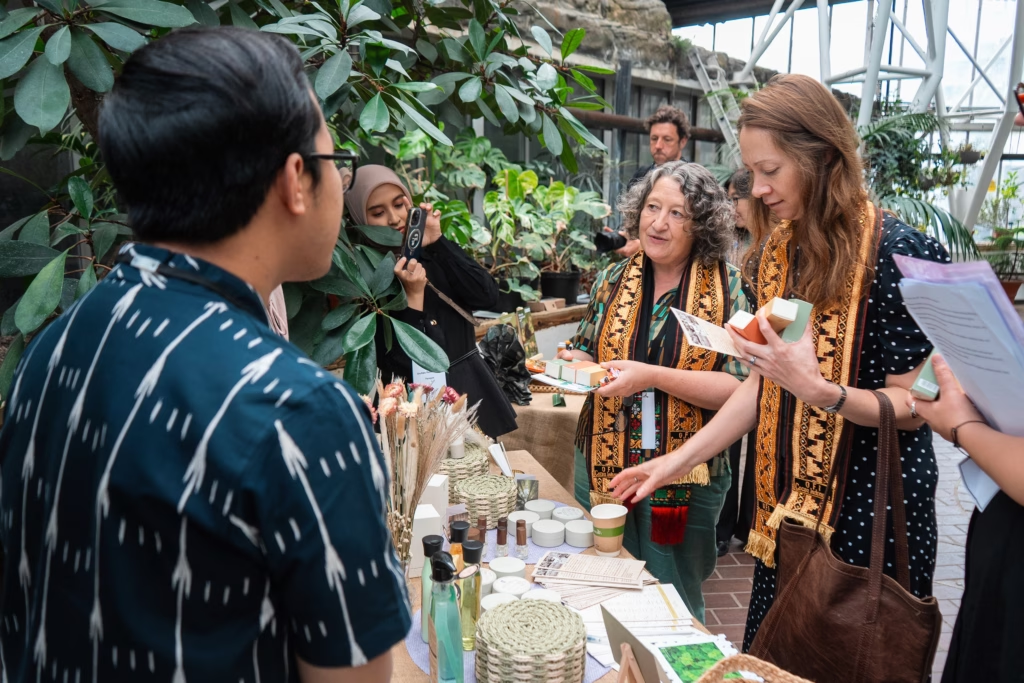
It was this narrative that the company brought across continents to the prestigious Partnership for Forests (P4F) Conference at the Barbican Conservatory in London on May 29, 2026. As the sole Indonesian beauty company participating in the forum this year, ParagonCorp opened the world’s eyes to the people who truly sustain the industry.
“Indonesia holds a crucial position in the global patchouli supply chain. However, those often forgotten are the farmers behind the commodity,” asserted dr. Sari Chairunnisa, Deputy CEO & Chief R&D Officer of ParagonCorp. “Through this forum, we want to bring their stories to a broader conversation”.
Regenerative Practices: Restoring the Rights of the Soil
Building a constructive ecosystem means going beyond extraction and giving back to nature. In Sulawesi, ParagonCorp empowers a supply chain network involving over 700 active patchouli farmers. This network does not operate in isolation; it has been certified For Life by the independent certification body, Ecocert.
Through this program, the well-being and safety of the farmers take precedence. They receive intensive agricultural training, alongside comprehensive occupational health and safety support. More importantly, the cultivation system has shifted from exploitative conventional methods to a regenerative approach. The clear objective is to maintain soil quality for future generations.
Practices on the ground demand extraordinary patience. After the land undergoes four harvest cycles within a period of about 15 months, it is not continuously forced to produce. The soil is given the right to rest through a crop rotation system designed to restore its natural fertility. Furthermore, circular principles are applied through the post-harvest stage, where distillation waste is composted and returned to the agricultural land as part of the soil’s natural nutrient cycle.
This relentless hard work forms the foundation for high-quality essential oils. “It takes about 250 kilograms of fresh patchouli leaves to produce 1 kilogram of oil,” dr. Sari explained, illustrating the reality on the ground. “This figure shows the immense hard work of the farmers in producing the ingredients that are subsequently used in various perfume products in the global market”.
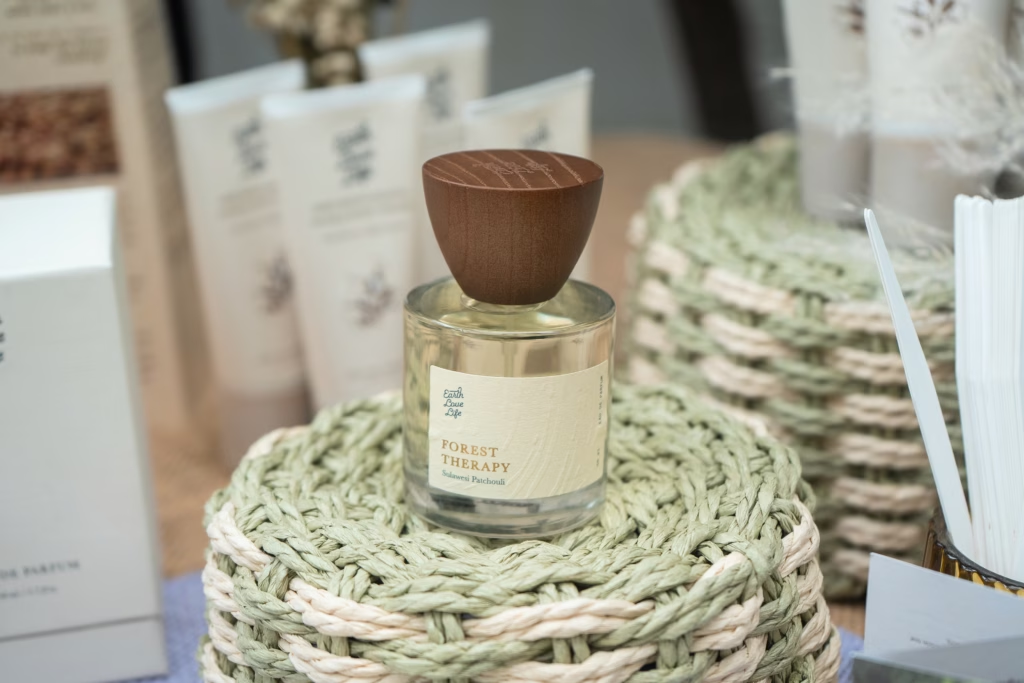
Today, the footprint of the labor of these 700 farmers can be traced directly by consumers, notably through products like the Earth Love Life – Forest Therapy EDP.
Unlocking the Bioeconomy of the Standing Forest
The narrative of sustainability does not end in the agricultural fields of Sulawesi. Through the P4F forum in London, ParagonCorp also championed the broader idea that forests should not be viewed merely as passive conservation areas. Forests harbor extraordinary economic potential for surrounding communities without sacrificing their preservation.
This vision is realized through bioeconomic exploration, responsibly utilizing Non-Timber Forest Products (NTFPs). In London, ParagonCorp introduced a beauty product prototype based on Illipe Butter. This nutrient-rich natural ingredient is extracted from the nuts of the Tengkawang tree (Shorea stenoptera) that grows wild in the hinterlands of West Kalimantan.
What makes this supply chain exceptional is its foundation in local wisdom. The Tengkawang nuts are harvested directly by the indigenous Dayak communities, following the natural shedding cycle of the trees. This process is conducted entirely without tree logging, land clearing, or deforestation. It serves as a testament that premium commodities can be obtained while keeping the ecosystem completely intact.
“Indonesia possesses extraordinary biodiversity. Through this forum, we want to show that standing forests can also create economic value for the community when managed responsibly,” dr. Sari stated.
This commitment to protecting forests as bastions of biodiversity is reinforced through active conservation measures. In collaboration with Indika Nature and CFES, ParagonCorp supports the protection of approximately 4,000 hectares of forest in Jambi and 1,000 hectares in Kalimantan. This initiative acts as a protective shield for the critical habitats of endangered wildlife, including the Bornean Clouded Leopard, Sun Bear, Helmeted Hornbill, Proboscis Monkey, Silvery Gibbon, Binturong, and Pangolin. Furthermore, protecting these areas is crucial for maintaining water systems and climate mitigation.
Goodness that Grows: Transitioning to Responsible Consumption
The upstream efforts empowering farmers and indigenous communities would lose their meaning if not accompanied by responsible innovation downstream. Commemorating World Environment Day 2026, ParagonCorp reaffirmed its “Goodness that Grows” initiative—a core belief that small, consistent steps in environmental preservation will grow into widespread impact.
At the product and operational levels, circularity and resource efficiency are continually accelerated. Many raw material innovations now rely on upcycling techniques. For instance, the Kahf brand utilizes upcycled coffee extract from coffee oil production byproducts as a natural exfoliator in its facial wash, thereby cutting down industrial waste. Meanwhile, Tavi and Emina utilize Wastar™ Lavender, an upcycled active ingredient derived from lavender remnants after essential oil extraction.
Additionally, the awareness of water crises and ocean pollution is addressed through intelligent formulation. Earth Love Life body wash products are designed with a fast-rinse concept that minimizes consumer water usage, combined with a biodegradable formula that breaks down naturally without polluting rivers and oceans. Ocean protection is also fortified through reef-safe sunscreens from Tavi and Kahf, formulated to be safe for coral ecosystems. To combat plastic pollution, various product packagings now adopt Post-Consumer Recycled (PCR) materials and PET materials designed for full recyclability.
Progress Means More Than Perfection
The industry’s transformation toward true sustainability is a long and challenging road. For ParagonCorp, current achievements are not the finish line.
“We understand that the journey toward sustainability does not have a definitive endpoint,” dr. Sari reflected on this ongoing process. “But we believe that every step taken with awareness and consistency will bring meaningful change”.
Amidst global pessimism regarding environmental degradation caused by industrial exploitation, the story of ParagonCorp’s collaboration with hundreds of patchouli farmers in Sulawesi and forest conservation with the Dayak community offers a hopeful alternative narrative. It is concrete proof that large-scale industries can walk hand-in-hand with ecological preservation and the prosperity of local communities.
“For us, what matters most is not perfection, but the courage to keep moving forward and learning to improve in every process,” dr. Sari added. “We believe the future of the industry is not only determined by the ability to create innovation but also by the ability to protect the ecosystem and the communities that support those innovations”.
From the farmlands of Sulawesi to the lush canopies of Kalimantan’s Tengkawang trees, the resounding message is clear: a truly beautiful beauty industry is one that leaves no one behind and refuses to steal the rights of future generations.
- An Urgent Plea for International Aid from the Heart of Indonesia’s Toxic Haze Crisis
- How the Savannas of Nusa Tenggara Became Indonesia’s New Epicenter for Land Fires
- Why World Mangrove Day Requires Action, Not Just Rhetoric?
- Fair Finance Asia Promotes Collaboration on Energy Transition
- The Smoke Crisis and Methane Time Bomb at Jatiwaringin Landfill
- One Year Since the Maba Sangaji Forest Tragedy