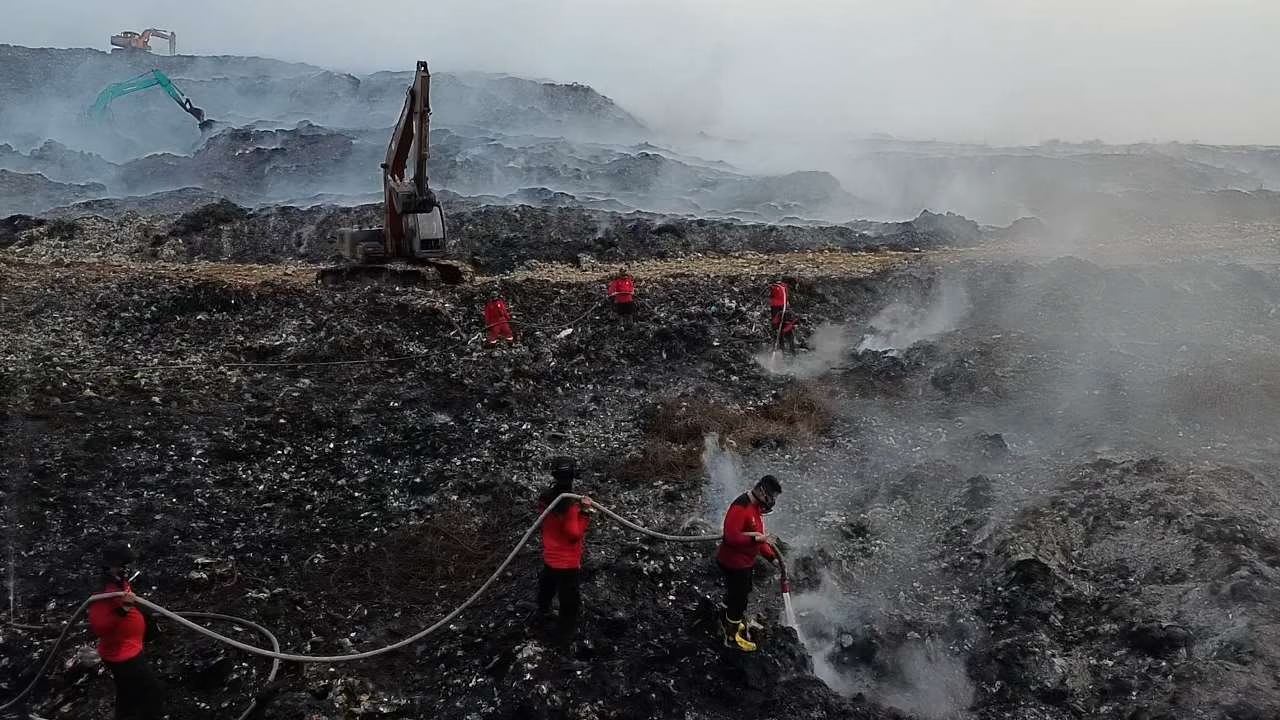
In the northern coastal stretch of Tangerang Regency, a thick, slate-gray shroud hangs low over Mauk District. The acrid, pungent stench of burning plastic creeps into the tightest crevices of residential homes, assaulting the lungs of young children in the dead of night and forcing hundreds to flee their ancestral land. Beneath the surface of the Jatiwaringin Landfill, a massive ecological crisis is quietly brewing, transforming tens of hectares of accumulated waste into a ticking methane time bomb ready to rupture at any moment.
July 2026 opened with a harrowing spectacle in Banten Province, where an intense scorching wave of extreme weather gripping the coastal region aligned with the volatile accumulation of methane gas deep within the landfill to ignite one of the most destructive environmental disasters of the year. Since Wednesday, July 1, 2026, the mountains of refuse at Jatiwaringin collapsed into an invisible yet lethal subterranean inferno, forcing the Tangerang Regency Government to swiftly declare a two-week Emergency Response Status spanning from July 1 to July 14, 2026. By the fifth day since the initial outbreak, conditions on the ground have deteriorated rather than improved, as the latest field updates confirm that the raging fire has consumed an area of 15 hectares—nearly half of the landfill’s total landmass of 33 hectares.
What initially appeared to be a localized mishap has now mutated into a full-scale regional emergency, threatening public health, crippling the local informal economy, and shattering the ecological thresholds of coastal air quality.
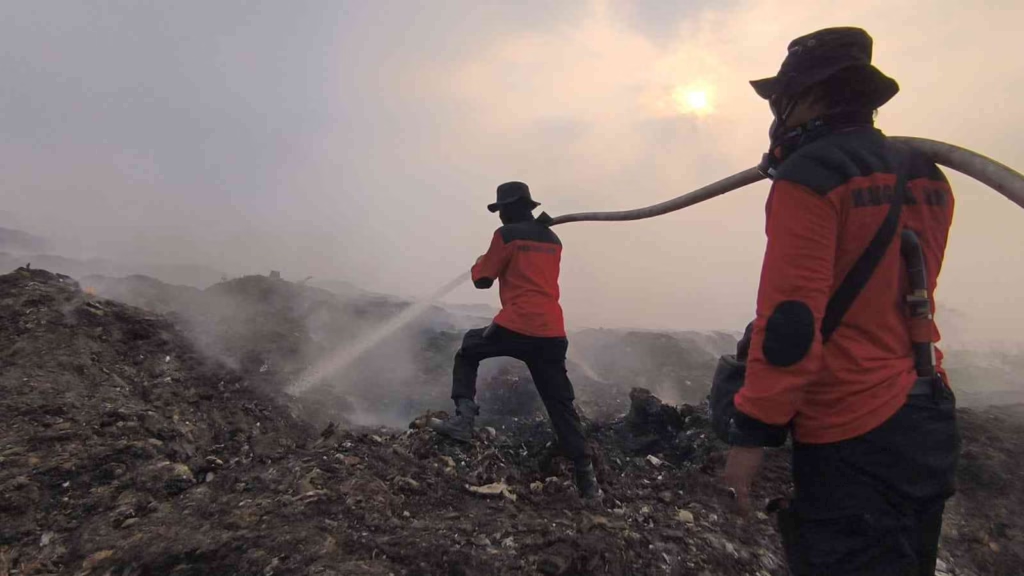
Combating the Jatiwaringin landfill fire is vastly different from dousing a conventional structural blaze, as the internal matrix of this waste mountain has mutated to mimic the characteristics of dried peatlands. During a direct site inspection, the Deputy Minister of Environment, Diaz Faisal Malik Hendropriyono, underscored this chilling technical reality by warning that while the fire might visually appear extinguished on the surface after being doused with water, it is merely a deceptive illusion because ancient hotspots remain intensely active at depths of less than 10 meters beneath the compacted layers of trash.
This phenomenon stems from trapped reservoirs of methane gas ($CH_4$), a byproduct of decades of anaerobic decomposition of organic waste. When extreme atmospheric heat bakes the surface, the internal temperature of the landfill spikes past its thermal auto-ignition threshold, and void spaces sandwiched between tightly packed plastic waste act like insulated kilns that trap intense heat, creating ideal conditions for subterranean fires to spread silently without requiring a significant supply of external oxygen.
As a potent greenhouse gas, methane boasts a heat-trapping capacity 28 times stronger than carbon dioxide ($CO_2$) over a century-long timescale. When this gas is sealed within airtight pockets beneath millions of tons of dense plastic debris, its partial pressure skyrockets until high outdoor ambient temperatures act as the final trigger, transforming these subterranean gas pockets into volatile combustion chambers. Consequently, attempting to douse these fires with conventional surface spraying risks generating excessive internal steam pressure, which could trigger a catastrophic structural explosion across the landfill slope.
A Chemical Soup Masked as Smog
Unlike forest fires which primarily release organic biomass particulates, the smoke billowing from the Jatiwaringin Landfill is a highly toxic chemical cocktail. The vast majority of the combusting material consists of synthetic polymers, PVC, and mixed municipal waste, which release highly carcinogenic compounds when oxidized under extreme temperatures.
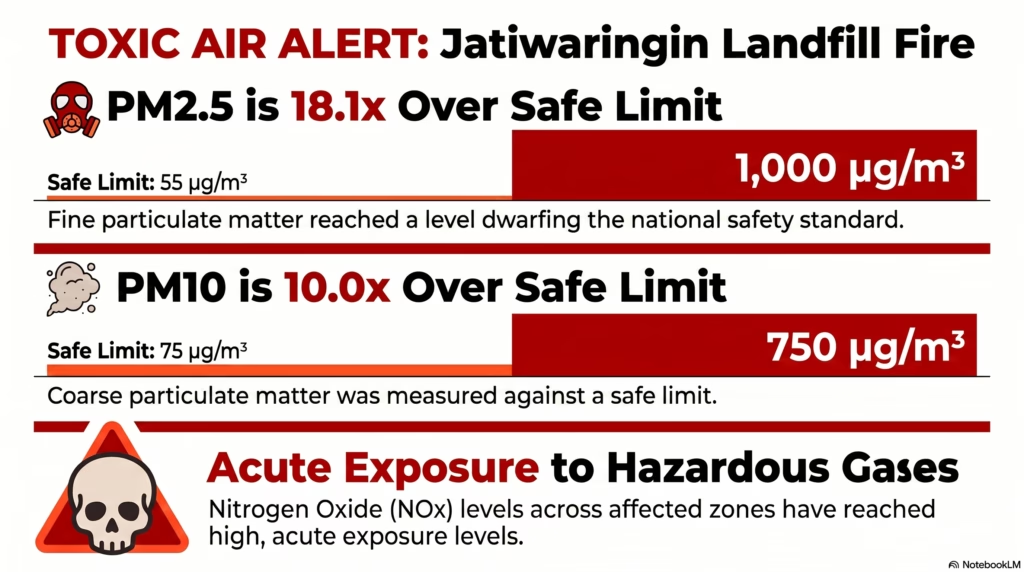
Air quality monitoring data released by the Ministry of Environment paints a terrifying picture, revealing that the concentration of fine particulate matter less than 2.5 micrometers in size, known as PM2.5, has spiked dramatically to an extreme peak of 1,000 micrograms per cubic meter. According to National Environmental Quality Standards, the safe threshold for daily human exposure is capped at just 55 micrograms per cubic meter, meaning the air breathed by residents surrounding the disaster area has been contaminated to a horrifying 18.1 times above the safe limit tolerated by the human body.
The situation regarding PM10 parameters is equally grim, soaring to 750 micrograms per cubic meter against an ideal national daily standard baseline of 75 micrograms per cubic meter, which represents a breach of exactly 10.0 times the safe limit. Beyond these microscopic solid particles, mobile laboratory teams detected heavy concentrations of acute, high-exposure hazardous gas compounds, specifically Nitrogen Oxides ($NO_x$) and Sulfur Oxides ($SO_x$), which are generated directly through the thermolysis of polyethylene and polystyrene plastics. These gases are highly corrosive to the lung’s epithelial tissues and are capable of inducing permanent respiratory damage within short periods of exposure. Faced with these alarming datasets, the Ministry of Environment took drastic measures by enforcing an immediate evacuation mandate, ordering a complete sterilization zone that prohibits all human activity within a 1.7-kilometer radius from the fire’s epicenter to shield the civilian population from acute toxic inhalation.
The Human Toll and Health Crisis
Behind the stark pollution statistics lies a very real human tragedy, as the toxic smoke plume, shifting alongside prevailing sea breezes, has completely upended the domestic lives of Mauk’s residents. In response, the Tangerang Regency Health Office launched an aggressive door-to-door health screening campaign to intercept vulnerable citizens suffering from pollutant exposure. Since the fire erupted, a total of 154 residents have formally reported acute respiratory distress, severe migraines, and debilitating eye irritation.
Out of those affected, 22 patients have been diagnosed with severe Acute Respiratory Infections and are currently isolated under intensive clinical care at the Mauk Community Health Center to prevent sudden respiratory failure. Meanwhile, 102 individuals have been forced to pack whatever belongings they can carry to seek shelter at emergency evacuation posts established outside the danger zone.
Inside the cramped, sweltering communal tents, anxiety runs deep among the evacuees, the majority of whom earn their living as subsistence farmers, day laborers, and informal waste pickers. Having been abruptly cut off from their daily sustenance, the complete loss of livelihood combined with the looming threat of chronic illness creates a crushing, multi-layered burden that marginalized communities on the periphery of the landfill must now endure.
High-Tech Warfare on the Frontlines
Recognizing that conventional firefighting tactics had hit a brick wall against the subterranean fire, a swift mobilization led to the formation of an inter-sectoral joint task force tasked with altering the course of the battle. Mitigation operations no longer rely on surface dousing but instead merge the raw grit of tactical personnel on the ground with cutting-edge remote sensing technology to map the hidden adversary under the earth.
In the skies above Jatiwaringin, digital aerial thermal mapping leads the defense, with environmental authorities deploying a specialized fleet of thermal drones outfitted with military-grade infrared sensors. These unmanned aerial vehicles conduct systematic thermal sweeps across the skies to process telemetry into precise, real-time heat maps displaying the exact coordinates and temperatures beneath the waste layers, allowing ground crews to bypass highly pressurized methane zones prone to violent flare-ups.
Tactic adjustments are further guided right at the edge of residential zones, where two state-of-the-art mobile air quality monitoring systems operate nonstop twenty-four hours a day. These systems track fluctuating microgram levels of hazardous particulates in real-time, providing the vital data required by the government to adjust evacuation boundaries dynamically.
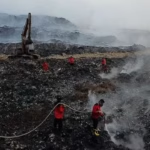
Simultaneously, the grueling physical pertempuran on the ground is carried out by 30 elite Manggala Agni wildland firefighters who were deployed directly from regional posts in Sulawesi and West Java. Rather than spraying water fruitlessly into the open air, this elite squad utilizes custom-engineered, high-pressure iron lances driven deep into the heart of the burning waste matrix through a scientifically designed pierce-and-inject method. By channeling water directly to the deepest burning embers, they extinguish the core heat source while cooling down accumulated methane pockets, a controlled reduction that effectively mitigates the risk of sudden flashovers that could violently launch burning, toxic waste into the atmosphere.
A Stark Wake-up Call for Coastal Waste Governance
The tragedy unfolding at the Jatiwaringin Landfill is far from a mere freak accident triggered by nature or bad weather, but rather a clear manifestation of a systemic failure in municipal waste management, where mountains of urban refuse are left to accumulate indefinitely without adequate disaster mitigation frameworks. Operating expansive open-dumping landfills under the harsh reality of modern global climate shifts is akin to planting an ecological landmine right next to civilian doorsteps.
When the emergency response status draws to a close on July 14, and when the toxic haze is finally dispersed by coastal winds, the true, arduous task of remediation must begin. This crisis must serve as a definitive turning point for policymakers to completely overhaul Banten’s waste management paradigm. Without a radical transition toward low-emission waste processing technologies and the strict enforcement of environmental protection laws, the residents of Mauk and other vulnerable coastal frontiers will remain shackled to a ticking clock, waiting for the next inevitable plume of black, toxic smoke to poison the lungs of generations to come.
- An Urgent Plea for International Aid from the Heart of Indonesia’s Toxic Haze Crisis
- How the Savannas of Nusa Tenggara Became Indonesia’s New Epicenter for Land Fires
- Why World Mangrove Day Requires Action, Not Just Rhetoric?

- Fair Finance Asia Promotes Collaboration on Energy Transition
- The Smoke Crisis and Methane Time Bomb at Jatiwaringin Landfill
- One Year Since the Maba Sangaji Forest Tragedy