West Java Besieged by Indonesia’s Deadliest Coal Power Plants
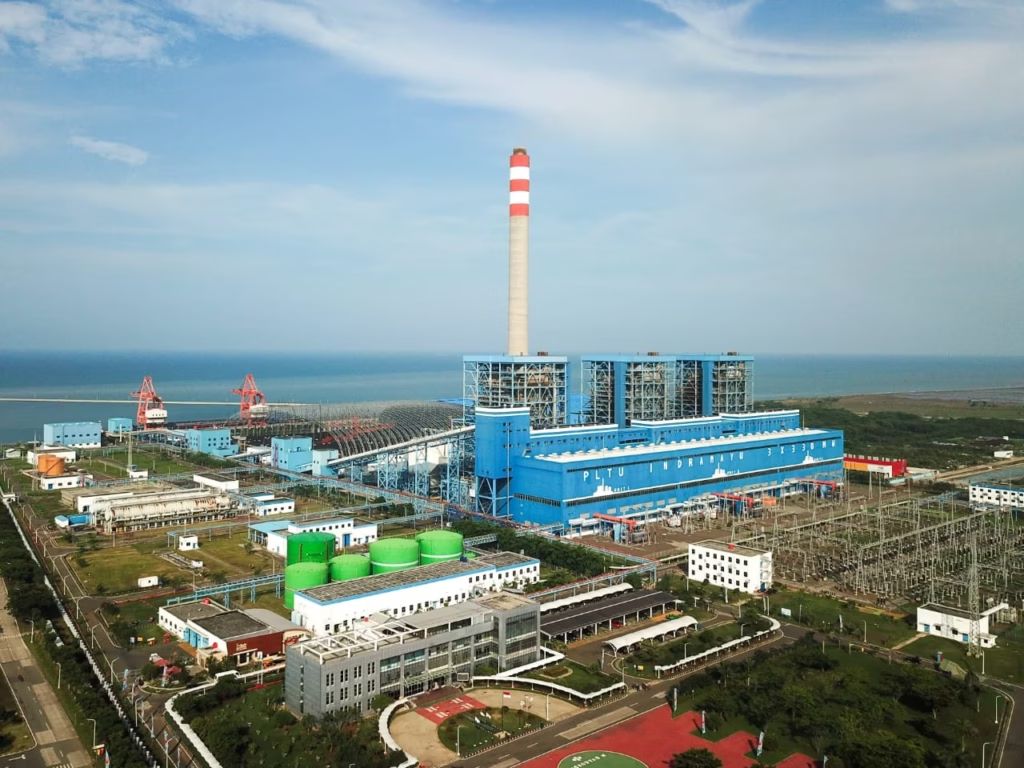
In West Java, three major facilities—the Cirebon, Pelabuhan Ratu, and Indramayu coal power plants—have made the blacklist.
In West Java, three major facilities—the Cirebon, Pelabuhan Ratu, and Indramayu coal power plants—have made the blacklist.
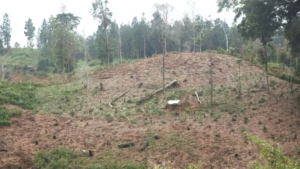
Energy Plantations project in Sukabumi stands at a crossroads. Caught between broken factory machines, failed calliandra saplings, and the citizens’ dread of losing their water sources.
One more Javan leopard has been permanently removed from a population already in a critical state—estimated at only a few hundred individuals left in the wild.
Indonesian law actually has an “antidote” for the SLAPP poison, known as the Anti-SLAPP concept.
Household waste can be more useful, both as a form of concern for the environment and as an economic opportunity.
Trash in Majalengka poses a complex challenge. With accumulating waste, Jatiwangi is now the biggest contributor of household garbage.
Sumedang tofu is not only savory and delicious, but there is a waste problem that pollutes the environment. In Giriharja Village, tofu waste is processed into alternative energy.
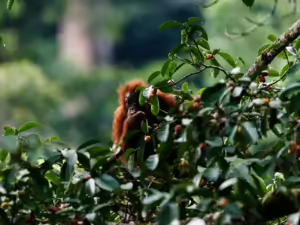
Research identified 59 orangutan food plants, with over 50% having medicinal properties
Sustainability thrift shops such as LamaLama Indonesia may become an alternative solution to Indonesia’s fashion waste problem.
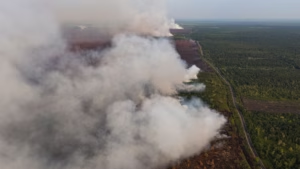
Today, surrounded by an increasingly impenetrable haze, millions of lives are hanging on the hope of global solidarity.
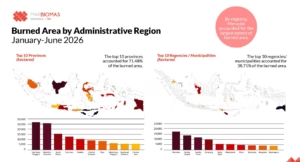
A recent analysis by MapBiomas Fire, NTT recorded the largest total burned area of any province in Indonesia between January and June 2026.
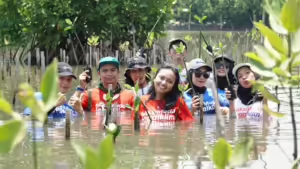
Honoring July 26 means remembering Hayhow Daniel Nanoto and all environmental defenders who sacrificed their lives for coastal ecosystems.
As Geopolitical Crises Fuel Coal Rush, Fair Finance Asia Demands a Truly Just Energy Transition
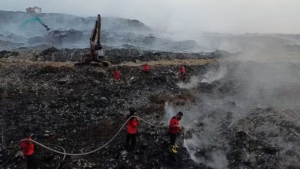
The Jatiwaringin Landfill tragedy is a systemic waste management failure, not a natural accident
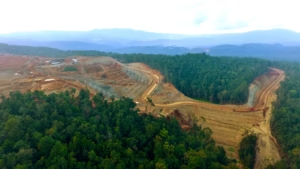
Eleven Maba Sangaji indigenous people were arrested during a ritual to reject mining in May 2025. A year later, the destructive power of mining had spread even further.
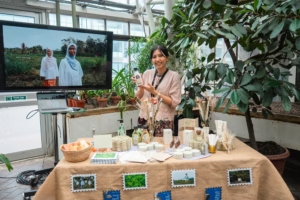
The Scent of Sustainability emerges as ParagonCorp and Indonesian farmers unite to build a regenerative global beauty supply chain.
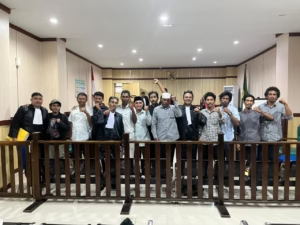
The criminalization of eleven members of the Maba Sangaji Indigenous community is a stark example of Strategic Lawsuits Against Public Participation (SLAPP). It reflects a calculated effort to silence grassroots resistance to forest destruction and river pollution linked to a nickel mining operation in North Maluku.
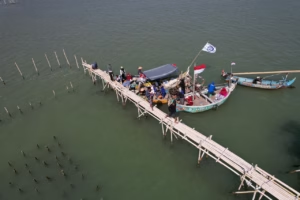
Ahmad Marzuki, a fisherman from Semarang, brought the voices of coastal communities to the global stage through his participation in the Global Citizens’ Assembly to advocate for food system justice and climate crisis solutions.
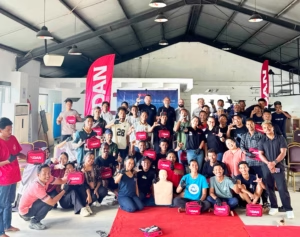
In commemoration of Kartini Day, the Indonesian Professional Women Divers Community (KP3I) emphasized the strategic role of women in the maritime sector through leadership in dive safety training in Labuan Bajo