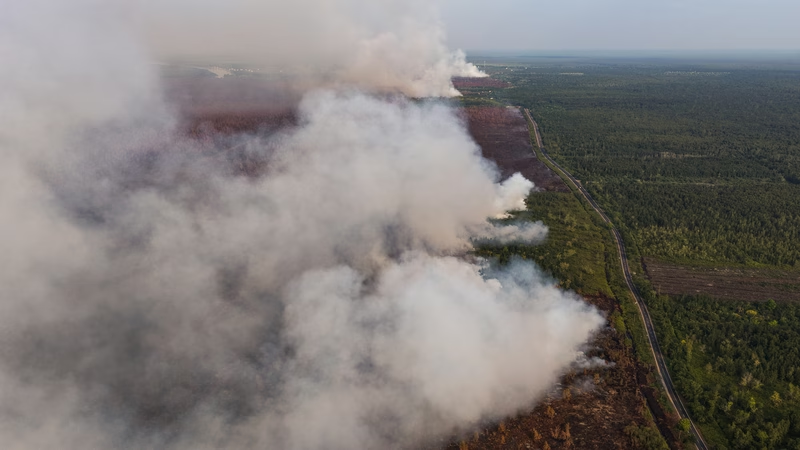
An Urgent Plea for International Aid from the Heart of Indonesia’s Toxic Haze Crisis
Today, surrounded by an increasingly impenetrable haze, millions of lives are hanging on the hope of global solidarity.
Arsip topik
Kumpulan liputan, analisis, dan pembaruan terbaru dalam topik ini. Gunakan arsip ini untuk menelusuri konteks editorial secara berurutan.
Today, surrounded by an increasingly impenetrable haze, millions of lives are hanging on the hope of global solidarity.
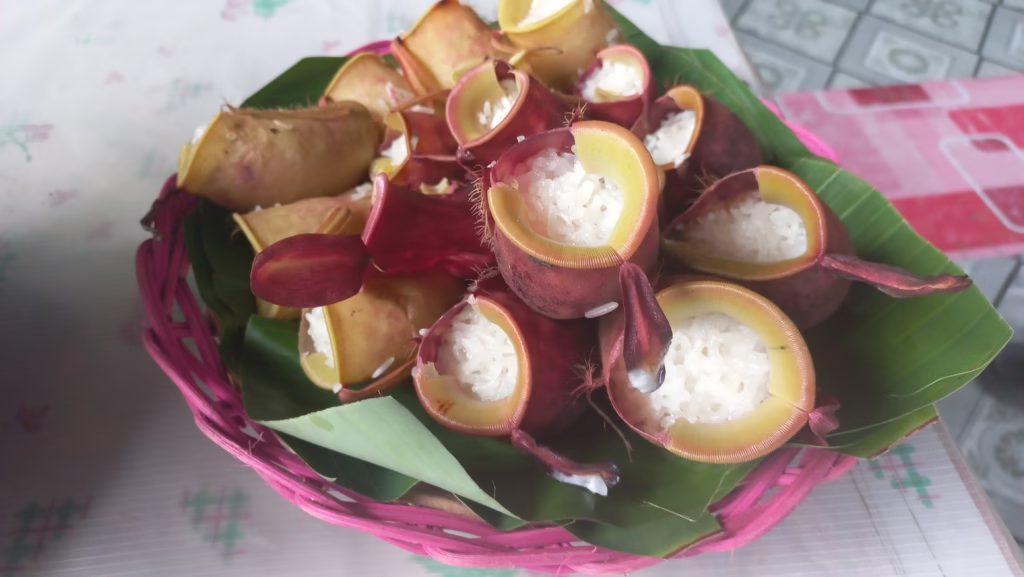
Nepenthes ampuralia, or pitcher plant, grows in the Lempur forest in Kerinci Regency, Jambi. This carnivorous plant is still used to wrap the traditional...
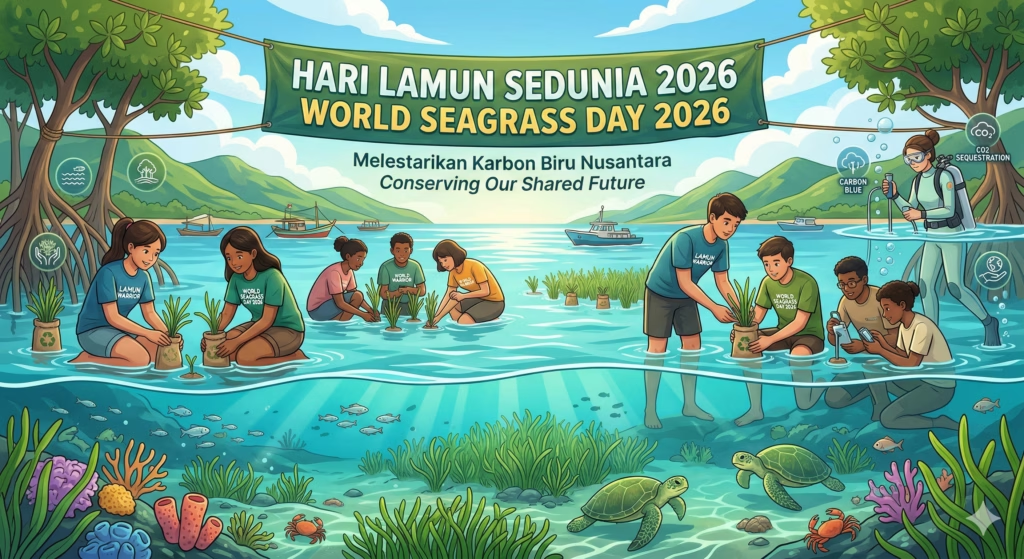
The global observance of World Seagrass Day on March 1 must no longer serve as a mere calendar ceremony that evaporates without meaningful policy...
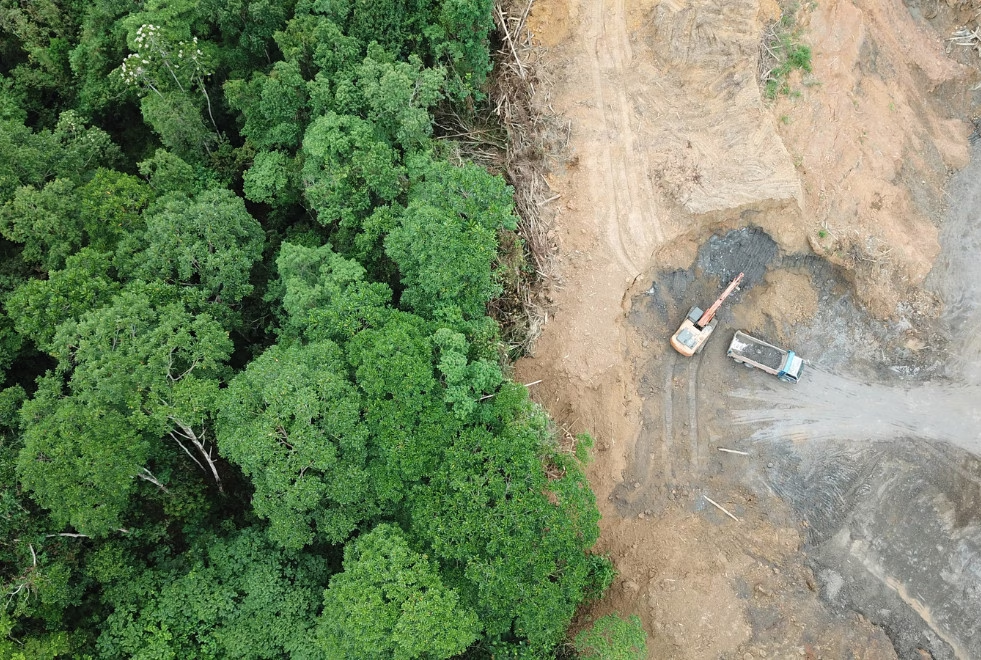
Environmental advocates argue that the Indonesian government's revocation of 28 business permits in Sumatra is an insufficient measure that must be followed by comprehensive...
The islanders of Bangka Belitung have long hunted squid for sustenance and trade, but some fear this is being imperilled by mining.
Deforestation in the upstream area of Batang Merao is believed to be the cause of the floods that inundated the Kerinci highlands for more...
Exploitation of the forests of South Pagai and North Pagai Islands in the Mentawai Islands has caused indigenous women to have difficulty obtaining clean...
The Nagari Talang Babungo community in Solok Regency, West Sumatra, is learning to manage household waste with eco-enzymes.
Residents fear Rempang's industrialization will harm the environment. Farmers and fishers refuse to be uprooted from their land and livelihood.
Memuat artikel...