Across the globe, ancient forests stand as Earth’s most vital lungs, climate buffers, and treasure troves of biodiversity. Yet, these primordial ecosystems face escalating threats from large-scale agriculture, illegal logging, mining, and drug trafficking. Standing on the front lines of this crisis are Indigenous communities whose ancestral wisdom and unwavering courage have preserved these landscapes for generations.
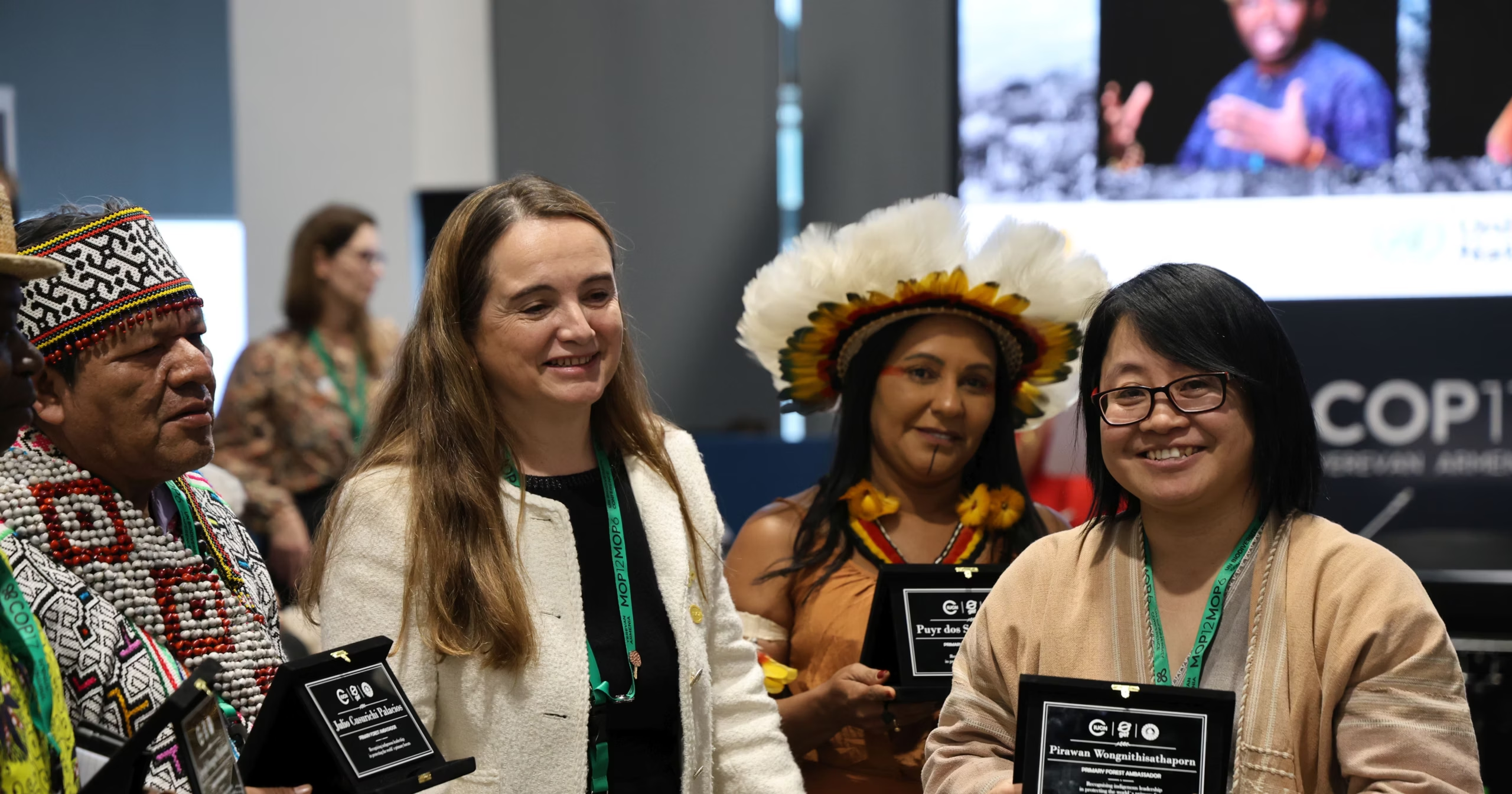
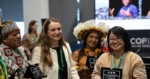
Recognizing this profound contribution, the International Union for Conservation of Nature (IUCN) has named six visionary Indigenous leaders from Latin America, Africa, and Asia as the world’s first-ever Indigenous Peoples Ambassadors for Primary Forests.
The historic announcement took place during a momentous ceremony at the seventeenth meeting of the Conference of the Parties to the Convention on Biological Diversity (CBD COP17) in Yerevan, Armenia. Selected from an impressive pool of 73 entries nominated by 69 organizations, these leaders were chosen by an expert committee through a rigorous evaluation process centered on their proven impact in safeguarding primary forests.
Champions of the Earth
The newly appointed ambassadors represent a powerful mosaic of global indigenous stewardship, each bringing decades of frontline defense, cultural revitalization, and policy advocacy to the world stage:
- Maimuna Jawara bridges the worlds of forest stewardship, cultural heritage, and women’s leadership. Hailing from the Manding Tribe in The Gambia, her work across the Senegambia region and the Great Virunga landscape focuses on documenting and revitalizing traditional ecological knowledge tied to sacred groves, medicinal plants, mangroves, and sustainable forest use.
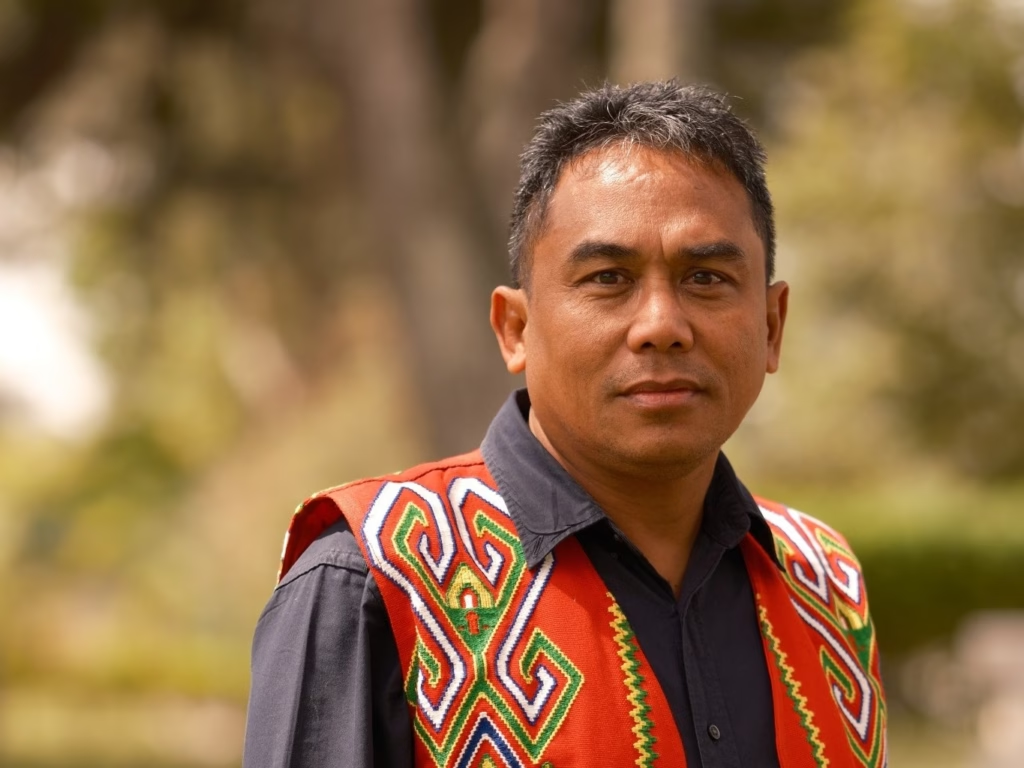
- Herkulanus Sutomo Manna, a Dayak Iban leader from Sungai Utik in West Kalimantan, Indonesia, has revitalized customary governance systems that empower his community to independently manage and protect their ancestral forests. By blending traditional zoning, hunting rules, and community patrols with participatory mapping and sustainable agriculture, his community ensures the continuity of both their livelihoods and their cultural heritage.
- Joseph Itongwa Miukumo of the Democratic Republic of Congo is a Bambuti Mabuluko leader dedicated to advancing indigenous-conserved territories. His tireless advocacy has successfully elevated indigenous rights and linked community-led conservation directly with national biodiversity and forest policy processes in the DRC.
- Julio Cusurichi Palacios brings the fight from the Peruvian Amazon. A Shipibo-Conibo leader from Madre de Dios, Julio blends indigenous governance, legal advocacy, and political engagement to strengthen forest protections and secure indigenous participation in national decision-making, while fiercely defending the territories of Indigenous Peoples in Isolation and Initial Contact.
- Puyr dos Santos Tembé represents the Tembé Peoples and the Alto Rio Guamá Indigenous territory in the Brazilian Amazon. Her life’s work centers on strengthening territorial governance, promoting indigenous voices in environmental decisions, and fostering ecological restoration through native seed collection, agroforestry, and sustainable livelihoods anchored in standing forests.
- Pirawan Wongnithisathaporn, a Karen Indigenous woman from Thailand, works through the Asia Indigenous Peoples Pact to weave grassroots indigenous experiences into regional and global climate and biodiversity dialogues. Her efforts concentrate on community forestry, environmental governance, and amplifying the leadership of indigenous women and girls.
A Global Call for Recognition and Justice
This groundbreaking ambassador initiative forms a core component of the Strengthening Conservation of Primary Forests project, funded by the Global Environment Facility (GEF) and implemented by IUCN in partnership with the United Nations Forum on Forests (UNFF). The initiative aims to elevate indigenous voices, bring local knowledge and priorities to international platforms, and foster cross-cultural knowledge exchange at high-level dialogues like CBD COP17.
“Across the world, Indigenous leaders are working tirelessly to defend our primary forests, often with limited resources, inadequate legal protections, and at grave risk to their own safety,” said Dr. Grethel Aguilar, IUCN Director General. “Evidence has shown that securing Indigenous Peoples’ land rights and recognizing and respecting traditional knowledge are among the most effective ways to protect forests and biodiversity. Yet Indigenous-led conservation is about more than environmental results; it is about recognizing rights, upholding dignity, and delivering justice.”
Echoing this sentiment, Diego Mesa Puyo, GEF CEO and Chairperson, emphasized the indispensable role of indigenous guardianship. “Indigenous Peoples are essential stewards of many of the world’s primary forests… Their leadership offers important lessons, and we look forward to continuing to learn from it across all our work. With more than $4.3 billion pledged for GEF-9, we have committed to increase our support for Indigenous Peoples’ leadership, and we look forward to advancing this work together with them and with these ambassadors.”
The Irreplaceable Value of Primary Forests
The urgency of this recognition cannot be overstated. The world’s 1.18 billion hectares of primary forests represent some of the most ecologically rich habitats on Earth. Storing between 30 to 70 percent more carbon than other forest types, they regulate the global climate, filter freshwater, mitigate disease, and buffer communities against extreme weather events like floods and droughts.
Despite their critical importance, roughly 30 percent of pre-industrial primary forest cover has already vanished due to deforestation, infrastructure expansion, and unsustainable resource extraction. Once lost, the intricate ecological networks and biodiversity shaped over centuries by natural processes can never be fully recreated by secondary forest regrowth.
While forest restoration is vital, it remains no substitute for protecting the remaining intact primary forests. As studies consistently demonstrate, Indigenous Peoples are the most effective guardians of these landscapes, maintaining lower rates of deforestation and degradation on their ancestral lands than anywhere else. By honoring these six leaders, the global community takes a crucial step toward ensuring that those who have protected the earth for generations are finally given the recognition, platform, and partnership they deserve.
- Indigenous Leaders Named First-Ever Primary Forest Ambassadors
- An Urgent Plea for International Aid from the Heart of Indonesia’s Toxic Haze Crisis
- How the Savannas of Nusa Tenggara Became Indonesia’s New Epicenter for Land Fires
- Why World Mangrove Day Requires Action, Not Just Rhetoric?

- Fair Finance Asia Promotes Collaboration on Energy Transition
- The Smoke Crisis and Methane Time Bomb at Jatiwaringin Landfill