
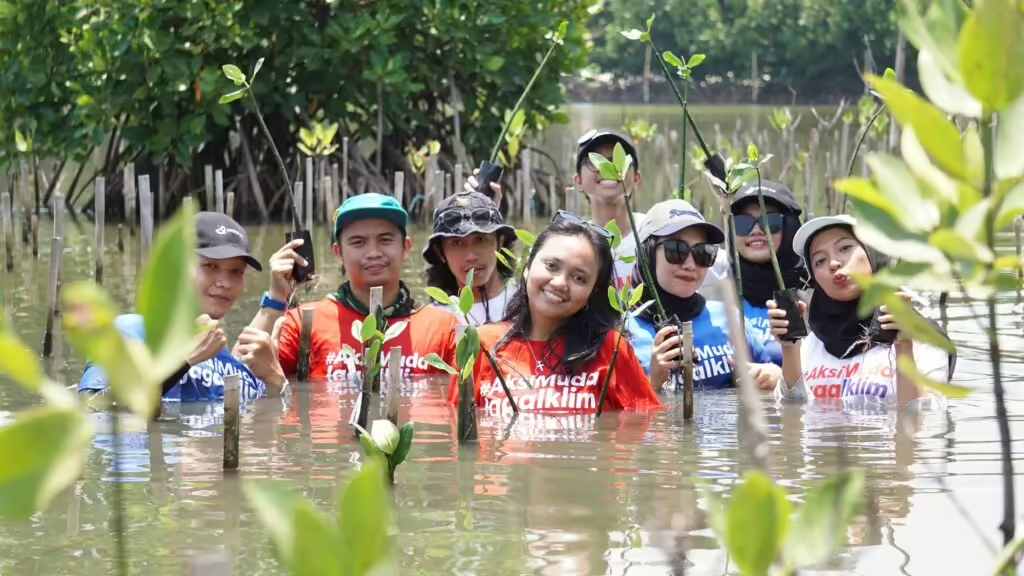
Every July 26, the global environmental community marks the International Day for the Conservation of the Mangrove Ecosystem. In diplomatic halls and high-level conferences, the day is frequently observed with ceremonial tree-planting drives and promises of sustainable coastal management. Yet, few remember that this date was not coined in air-conditioned convention centers. It was born out of blood, sacrifice, and grassroots resistance on the frontlines of environmental defense.
The historical roots of July 26 lie in Muisne, Ecuador. On this day in 1998, Hayhow Daniel Nanoto, a Greenpeace environmental activist, died of a heart attack during a massive protest. Alongside local communities, he stood against bulldozers to block the expansion of industrial shrimp aquaculture that was clearing vast swathes of Pacific coastal mangroves. Corporate shrimp farms were razing vital coastal ecosystems to cultivate high-value export commodities.
Nanoto’s tragic death galvanized coastal activism worldwide. The global NGO network Red Manglar International championed July 26 as an annual day of action to defend mangroves against industrial destruction. It took nearly two decades of persistent advocacy before UNESCO officially recognized the date in 2015. UNESCO’s resolution underscored a grim reality: mangroves are among the planet’s most productive ecosystems, yet they remain severely threatened by unchecked human development.
Beyond Carbon Storage: The Ecological Safeguard
From a climate and ecological perspective, the imperative to conserve mangroves is absolute. Mangrove forests are powerhouses of blue carbon sequestration. On a per-hectare basis, these coastal wetlands can absorb and store up to four times more carbon than terrestrial tropical rainforests. The carbon is trapped deep within the anoxic sediment for centuries, preventing it from leaking into the atmosphere as greenhouse gases.
Beyond climate mitigation, mangrove root systems act as living coastal shields (bio-shields), absorbing wave energy to mitigate coastal erosion, storm surges, and tsunamis. Beneath the quiet mud, mangroves serve as critical nursery grounds for thousands of marine species, forming the foundation of global marine biodiversity, local food security, and the livelihoods of artisanal fishing communities.
Indonesia’s Dilemma: The World’s Largest Mangrove Haven Under Siege
For Indonesia, World Mangrove Day touches the core of national ecological sovereignty. Holding between 20 to 25 percent of the world’s remaining mangrove cover—roughly 3.3 million hectares—Indonesia is the world’s most critical mangrove sanctuary. However, this natural wealth is accompanied by alarming rates of coastal degradation.
Over the decades, vast areas of Indonesian mangroves have been converted into intensive aquaculture ponds, expanded industrial estates, coastal infrastructure, and land reclamation projects in the name of economic growth. While the Indonesian government has rolled out ambitious national restoration targets, critics point out that quantitative planting targets often prioritize photo opportunities over ecological survival rates and tenure security for coastal communities.
Reclaiming the Spirit of July 26
Commemorating World Mangrove Day must extend beyond annual PR exercises and photo-ops. The international community and national governments must reconnect with the true spirit of July 26: standing against environmental destruction and safeguarding the rights of coastal communities.
Restoration efforts will remain a band-aid solution if industrial concessions continue to encroaching on fragile coastal zones and small islands. Policy-makers must shift away from viewing mangroves as empty, low-value land ready to be sacrificed for short-term commercial gain.
Protecting these ecosystems requires rigorous spatial planning enforcement, legal recognition of indigenous and local community land rights, and sustained support for community-led conservation.
Honoring July 26 means remembering Hayhow Daniel Nanoto and all environmental defenders who sacrificed their lives for coastal ecosystems. The best way to preserve their legacy is not through polished speeches, but through unyielding political will to halt mangrove destruction today for the climate resilience of tomorrow.
- An Urgent Plea for International Aid from the Heart of Indonesia’s Toxic Haze Crisis
- How the Savannas of Nusa Tenggara Became Indonesia’s New Epicenter for Land Fires
- Why World Mangrove Day Requires Action, Not Just Rhetoric?
- Fair Finance Asia Promotes Collaboration on Energy Transition

- The Smoke Crisis and Methane Time Bomb at Jatiwaringin Landfill
- One Year Since the Maba Sangaji Forest Tragedy