Halaman

Kebijakan Privasi Ekuatorial.com

Selamat datang di Ekuatorial.com (“Kami”). Kami menghargai privasi Pengguna dan berkomitmen untuk melindungi data pribadi yang Anda bagikan kepada Kami. Kebijakan Privasi ini menjelaskan bagaimana Kami mengumpulkan, menggunakan, mengungkapkan, dan melindungi informasi Anda saat mengakses serta menggunakan layanan media siber Kami.

1. Informasi yang Kami Kumpulkan

Kami mengumpulkan informasi dari dan tentang Pengguna melalui beberapa cara:

  • Informasi yang Anda Berikan Secara Langsung:
    • Pendaftaran Akun/Buletin: Nama, alamat email, dan identitas dasar lainnya saat Anda mendaftar buletin (newsletter), membuat akun, atau mendaftar acara.
    • Interaksi/Komentar: Informasi atau kiriman data saat Anda meninggalkan komentar pada artikel, menghubungi tim redaksi, atau berpartisipasi dalam survei/prakarsa jurnalisme warga.
  • Informasi yang Dikumpulkan Secara Otomatis:
    • Data Log & Perangkat: Alamat IP, jenis peramban (browser), sistem operasi, halaman yang dikunjungi, waktu akses, serta referensi URL.
    • Cookie dan Teknologi Serupa: Kami menggunakan cookies untuk mengenali peramban Anda, mengingat preferensi, serta menganalisis statistik lalu lintas situs.

2. Penggunaan Informasi

Informasi yang dikumpulkan digunakan untuk kepentingan operasional dan peningkatan kualitas jurnalisme Kami, antara lain:

  • Menyediakan, mengoperasikan, dan memelihara layanan media Ekuatorial.com.
  • Mengirimkan buletin, pembaruan berita, atau pemberitahuan layanan yang relevan.
  • Menganalisis tren penggunaan untuk mengoptimalkan navigasi dan pengalaman pembaca.
  • Menjaga keamanan teknis dan mencegah tindakan penipuan atau penyalahgunaan platform.
  • Memenuhi kewajiban hukum yang berlaku di Republik Indonesia.

3. Pengungkapan dan Pembagian Data

Ekuatorial.com tidak pernah menjual atau menyewakan data pribadi Anda kepada pihak ketiga. Kami hanya dapat membagikan informasi Anda dalam situasi berikut:

  • Penyedia Layanan (Vendor): Pihak ketiga yang membantu operasional situs Kami (seperti penyedia hosting, analitik web, atau layanan email) dengan kewajiban menjaga kerahasiaan data sesuai standar UU PDP.
  • Kewajiban Hukum: Apabila diwajibkan oleh hukum, peraturan perundang-undangan, atau perintah pengadilan/aparat penegak hukum yang sah di Indonesia.
  • Perlindungan Hak: Untuk melindungi hak, properti, atau keselamatan Ekuatorial.com, pengguna, atau masyarakat umum.

4. Hak Pembaca (Subjek Data)

Sesuai UU Perlindungan Data Pribadi di Indonesia, Anda memiliki hak-hak berikut terkait data pribadi Anda:

  • Hak Akses: Meminta salinan data pribadi yang Kami simpan tentang Anda.
  • Hak Pembetulan: Meminta koreksi atas data pribadi yang tidak akurat atau tidak lengkap.
  • Hak Penghapusan (Penghentian Pemrosesan): Meminta penghapusan data pribadi Anda dari sistem Kami.
  • Hak Penarikan Persetujuan: Menarik kembali persetujuan pemrosesan data yang sebelumnya telah Anda berikan (seperti unsubscribing dari buletin).

5. Keamanan Data

Kami menerapkan langkah-langkah keamanan teknis, administratif, dan fisik yang wajar untuk melindungi data pribadi Anda dari akses, pengungkapan, perubahan, atau penghancuran yang tidak sah. Walaupun demikian, tidak ada metode transmisi internet yang 100% aman, sehingga Kami terus berupaya memperbarui standar keamanan Kami.

6. Tautan ke Situs Pihak Ketiga

Situs Kami dapat memuat tautan ke situs web lain yang tidak dioperasikan oleh Ekuatorial.com. Kami tidak bertanggung jawab atas isi atau kebijakan privasi dari situs pihak ketiga tersebut. Kami menyarankan Anda untuk membaca kebijakan privasi setiap situs yang Anda kunjungi.

7. Perubahan Kebijakan Privasi

Kami dapat memperbarui Kebijakan Privasi ini dari waktu ke waktu untuk menyesuaikan dengan perkembangan hukum atau operasional media Kami. Setiap perubahan akan dipublikasikan di halaman ini dengan menyantumkan tanggal pembaruan terbaru di bagian atas.

Halaman

Ketentuan Layanan Ekuatorial.com

Selamat datang di Ekuatorial.com. Dengan mengakses, membaca, atau menggunakan seluruh fitur dan layanan yang ada di portal berita ini, Anda dianggap telah memahami, menyetujui, dan terikat oleh Ketentuan Layanan berikut.

1. Ketentuan Umum dan Hak Cipta

  • Kepemilikan Konten: Seluruh materi berupa teks, foto, grafis, video, dan audio yang dipublikasikan di Ekuatorial.com dilindungi oleh Undang-Undang Hak Cipta.
  • Penggunaan Konten: Pengguna dilarang menggandakan, mendistribusikan ulang, atau mempublikasikan kembali seluruh atau sebagian konten tanpa mencantumkan kredit jelas (nama penulis dan Ekuatorial.com) serta menyertakan pranala aktif (hyperlink) menuju artikel asli.

2. Pedoman Media Cyber & Konten Pengguna Ekuatorial.com tunduk pada Pedoman Pemberitaan Media Siber yang ditetapkan oleh Dewan Pers Indonesia.

  • Kolom Komentar: Pengguna bertanggung jawab penuh atas komentar atau kontribusi tulisan yang diunggah.
  • Larangan: Dilarang mengunggah komentar yang memuat unsur SARA, ujaran kebencian (hate speech), pencemaran nama baik, pornografi, ancaman kekerasan, serta muatan spam/promosi komersial tanpa izin.
  • Moderasi: Redaksi berhak menghapus, mengedit, atau menolak komentar/kontribusi yang melanggar ketentuan hukum dan etika pers tanpa pemberitahuan terlebih dahulu.

3. Hak Jawab dan Koreksi

  • Sesuai UU No. 40 Tahun 1999 tentang Pers, Ekuatorial.com melayani Hak Jawab dan Hak Koreksi dari pembaca atau pihak yang merasa dirugikan oleh kekeliruan informasi pada berita yang diterbitkan.
  • Permintaan Hak Jawab dapat dikirimkan melalui surel resmi redaksi disertai identitas diri dan bukti penunjang yang sah.

4. Penolakan Tanggung Jawab (Disclaimer)

  • Ekuatorial.com berusaha menyajikan informasi secara akurat dan tepercaya. Namun, kami tidak bertanggung jawab atas kerugian materiil maupun immaterial yang timbul akibat penggunaan data atau informasi dari situs ini.
  • Tautan ke situs pihak ketiga disediakan hanya sebagai referensi; Ekuatorial.com tidak mengontrol atau bertanggung jawab atas isi situs luar tersebut.

5. Perubahan Ketentuan Ekuatorial.com berhak memperbarui atau mengubah Ketentuan Layanan ini sewaktu-waktu sesuai perkembangan hukum dan standar industri media online di Indonesia.

Halaman

Landing Page

Halaman

Timore

TIMORE | To Know More About NTT
Welcome to East Nusa Tenggara

To Know More
About NTT

Beyond Bali lies an archipelago of untold stories, breathtaking nature, and profound cultural heritage. We are here to bridge international travelers with the authentic soul of NTT.

Our Mission

Why TIMORE?

When discussing Indonesia, most international tourists only know “Bali”. Meanwhile, East Nusa Tenggara (NTT) possesses extraordinary natural beauty and culture, yet information remains scarce and inaccessible for global travelers.

TIMORE provides an English-based digital platform and immersive events that deliver authentic information about NTT. We don’t just guide tourists; we open global market access for local MSMEs (UMKM), ensuring tourism growth directly benefits the local communities.

  • ✓ Authentic Cultural Information
  • ✓ Empowering Local MSMEs
  • ✓ Bridging Global Travelers

@TIMORENEWS

Latest Insights & Stories

Dive deep into the environmental shifts, sustainable tourism, and cultural resilience shaping the future of NTT.

Environment & Food

From Sea to Table: How Climate Change is Reshaping Local Seafood

Discover the profound impact of rising ocean temperatures and unpredictable weather patterns on local coastal communities. This article explores how traditional fishermen and the local seafood industry are adapting to the harsh realities of climate change to bring food to our tables.

Read More
Culture & Heritage

The Enchanting Land Above the Clouds: 5 Facts About Wae Rebo

Nestled high in the mountains of Flores, Wae Rebo is a living testament to Indonesia’s cultural resilience. Recognized by UNESCO, uncover 5 fascinating facts about this isolated village, its unique Mbaru Niang houses, and the spiritual tranquility it offers to every visitor.

Read More

Plan Your Journey

Interactive Trip Planner

Select your travel dates and destination to get tailored transportation, accommodation recommendations, and estimated costs.

Stay Updated with Timore News

From cultural events to essential travel alerts (like Mt. Lewotobi updates), join our community to receive the latest and most authentic information straight to your inbox.

TIMORE

An initiative to introduce the profound nature, culture, and untold stories of East Nusa Tenggara to the world, while empowering local communities.

The Team

  • Nania Satriani
  • Angelia Austina
  • Lintang Pramatyanti
  • Auresia Yunita
  • Servina Viviene
  • Christoforus Rivan

© 2024 TIMORE Project – UMN. All rights reserved.

Halaman

Cyber Media News Coverage Guidelines

Freedom of speech, freedom of expression and press freedom are rights protected by Pancasila state ideology, the 1945 Constitution and the Universal Declaration of Human Rights. The existence of cyber media in Indonesia is part of freedom of speech, freedom of expression and press freedom.

Cyber media have special characteristics that require guidelines to ensure their professionalism and that they fulfill their function, obligations and rights in compliance with both Law No. 40/1999 on the press and the Journalists’ Code of Ethics.

For that reason, the Press Council and a number of press organizations, cyber media editorial board members and certain members of the public formulated the Cyber Media News Coverage Guidelines as follows:

  1. Scope
    1. Cyber media are any form of media that use the internet and conduct journalistic activities, in accordance with the Press Law and the Standards for Press Companies established by the Press Council.
    2. User-generated content is any content created or published by users of cyber media, such as articles, pictures, comments, audio and video files and other files uploaded and attached to the cyber media, such as blogs, forums, readers’ or viewers’ comments and other material.
  2. Verification and Fairness
    1. In principle, each story has to be verified.
    2. News that may harm a particular party should provide verification within the same news item to ensure accuracy and fairness.
    3. The provision in clause (a) above may be waived, on condition that:
      1. The news contains information of public urgency;
      2. The original source of news is clearly identified, credible and competent;
      3. The source of verification cannot be reached for comment;
      4. The media outlet explains to readers that the news needs further verification, and verification will be made as soon as possible. The explanation should be included at the end of the same story, in parentheses and italicized.
    4. Upon the publication of the news item in accordance with clause (3), the media must continue efforts to verify the news, and once verification is obtained, it should be listed as a news update with a link to the previous unverified news item.
  3. User-generated Content
    1. Cyber media outlets must announce the terms and conditions of user-generated content, which should not violate Law No. 40/1999 on the press and the Journalists’ Code of Ethics. The terms and conditions should be easy to read and understand.
    2. Cyber media outlets are obliged to require each user to register and go through a log-in process to be able to publish all forms of user-generated content. Provisions on the log-in procedure shall be formulated further.
    3. During registration, cyber media outlets must require all users to give written affirmation that the user-generated content:
      1. 1 Does not contain lies or libel and is not sadistic or inappropriate;
      2. 2 Does not contain prejudice or hatred toward certain ethnicity, religion, race or societal group and does not encourage acts of violence;
      3. 3 Does not discriminate on the basis of gender or language, and does not disrespect the dignity of the weak, the poor or the mentally or physically disabled.
    4. Cyber media outlets must exercise their right to edit or delete user-generated content that violates point (3).
    5. Cyber media outlets shall provide a complaint mechanism for user-generated content deemed to violate the provisions in point (3). Such mechanism must be placed in a visible place so that it is easily accessible for users.
    6. Cyber media outlets must edit, delete and make any necessary corrections to user-generated content that is reported to have violated the provisions in point (3) immediately and proportionally within 48 hours after a report is received.
    7. A cyber media outlet that has complied with the provisions in points (1), (2), (3) and (6) is not responsible for liabilities resulting from the publishing of the content that violates the provisions in point (c).
    8. A cyber media outlet shall be responsible for user-generated content that has been reported if it does not carry out the necessary actions within the required period as stipulated in point (6).
  4. Clarification, Corrections and the Right of Reply
    1. Clarification and corrections must be done when necessary and the right of reply honored in compliance with the Press Law, the Journalists’ Code of Ethics and the Guidelines to the Right of Reply established by the Press Council.
    2. Clarification, corrections and/or the right of reply message should be linked to the news to which the clarification, correction or the right of reply is related.
    3. The media outlet should post the time of the publication of each clarification, correction or the right of reply message.
    4. If the corrected article is also published by other cyber media outlets, then:
      1. The responsibility of the cyber media outlet that produced the article is limited to the article published by its outlet or other media outlets under its authority;
      2. Correction to the article carried out by the original cyber media outlet should also be made by other outlets that republish the article;
      3. If the media outlets that republish the article from another cyber media do not make the necessary corrections to the article after the original cyber media outlet has, the republishing media will bear all the legal consequences arising from the article on which corrections are not made.
    5. In accordance with the Press Law, cyber media outlets that do not honor the right of reply will be subject to a maximum fine of Rp 500,000,000 (five hundred million rupiah).
  5. Retraction of News
    1. A news article that has been published cannot be retracted on reasons of censorship by any parties other than the editorial board, unless it is related to prejudice and hatred toward ethnicity, religion, race or societal group, on grounds of indecency, the future of a child, traumatic experience of a victim or other considerations that shall be determined by the Press Council.
    2. Other cyber media outlets are obliged to follow the retraction of the same news item that the original media outlet retracted.
    3. The retraction of news should be accompanied with a public announcement on the reason for the retraction.
  6. Advertisements
    1. Cyber media outlets must clearly distinguish between news and advertisement.
    2. Any news/article/content that is an advertisement or paid content should carry the description “advertorial”, “advertisement”, “ad”, “sponsored” or other words explaining that the news/article/content is an advertisement.
  7. Copyright
    Cyber media outlets must respect copyrights as governed by other laws and regulations.
  8. Inclusion of the Guidelines
    A cyber media outlet should include these Cyber Media News Coverage Guidelines in a visible place on its website.
  9. Disputes
    Any dispute arising from the implementation of these Cyber Media News Coverage Guidelines shall be resolved by the Press Council.


These guidelines are signed by the Press Council and the press community in Jakarta on 3 February 2012

Source: The Press Council (These guidelines have been translated from Indonesian by Ekuatorial).

Halaman

About Us

Ekuatorial is a GeoJournalism site that publishes articles and visualizations related to the environment, covering issues of forestry, marine affairs, climate crisis, biodiversity, and other environmental challenges in Indonesia.

About Us

Indonesia is one of the fastest growing economies in the world. At the same time, is also home to some of the richest ecosystems and natural resources in the world. As economic development increases, Indonesia must also find ways to address environmental challenges that are largely caused by poor urban planning and a development approach that pays little attention to impacts on the environment and society. These include the climate crisis, loss of biodiversity, poor waste management, air and ocean pollution, drought, depletion of water sources, and deforestation.

Ekuatorial, an Indonesia-based geojurnalism site that combines stories with map-based data visualization to provide a scientific context to narrative storytelling, by the Society of Indonesian Environmental Journalists (SIEJ) with the support of nternews’ Earth Journalism Network, an international non-profit organization that provides support for independent media and empowers journalists from developing countries to cover the environment more effectively.

Ekuatorial partners with correspondents, journalists, and SIEJ members across Indonesia to produce stories and articles that prioritize balance, multi-stakeholder perspectives, voices of marginalized groups, gender equality, and solutions.

Editor in Chief : Asep Saefullah
Editor : Monica Dian Adelia
Editorial Staff : Noura Arifin, Themmy Doaly, Dimas Rachmadan
Social Media Spesialist : Siti Indah Nur’aini

Publisher : PT Khatulistiwa Hijau Berkelanjutan
Commissioner : Andi Fachrizal, Joni Aswira Putra
CEO : Asep Saefullah
Business Director : Fira Abrurrahman
Partnership & Sales Manager : Ati Kurnia
Marketing & Community Manager : Dea Safira


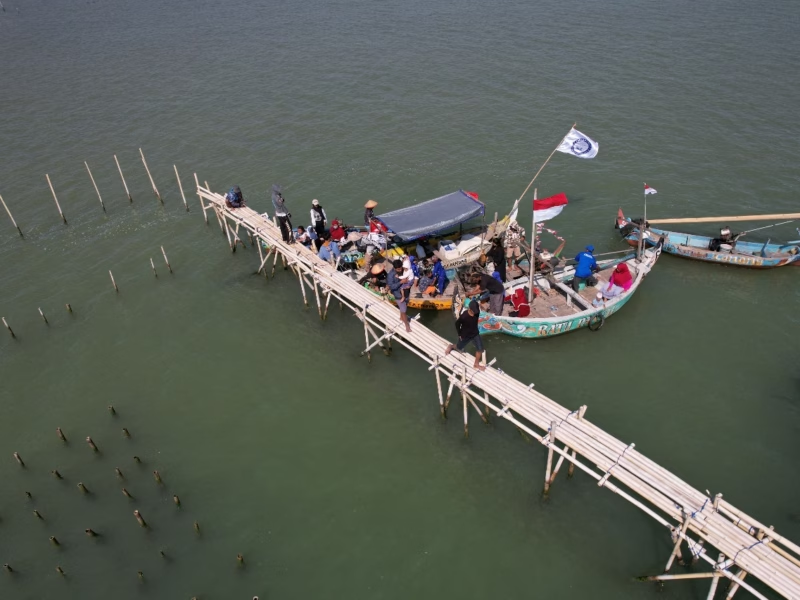
Banner image: Fishing boats dock at Kelapa Tuban Beach, Tuban, East Java, 19 November 2019. Based on 2015 report by the National Statistics Agency (National Social and Economic Survey), the largest number of fishermen in Indonesia are in East Java, at around 334,000 people. Credit: Wisnu Agung Prasetyo / Tirto

Halaman

Home

Indonesia’s Nickel Boom Is Flooding Indigenous Lands in North Maluku

Indonesia’s Nickel Boom Is Flooding Indigenous Lands in North Maluku

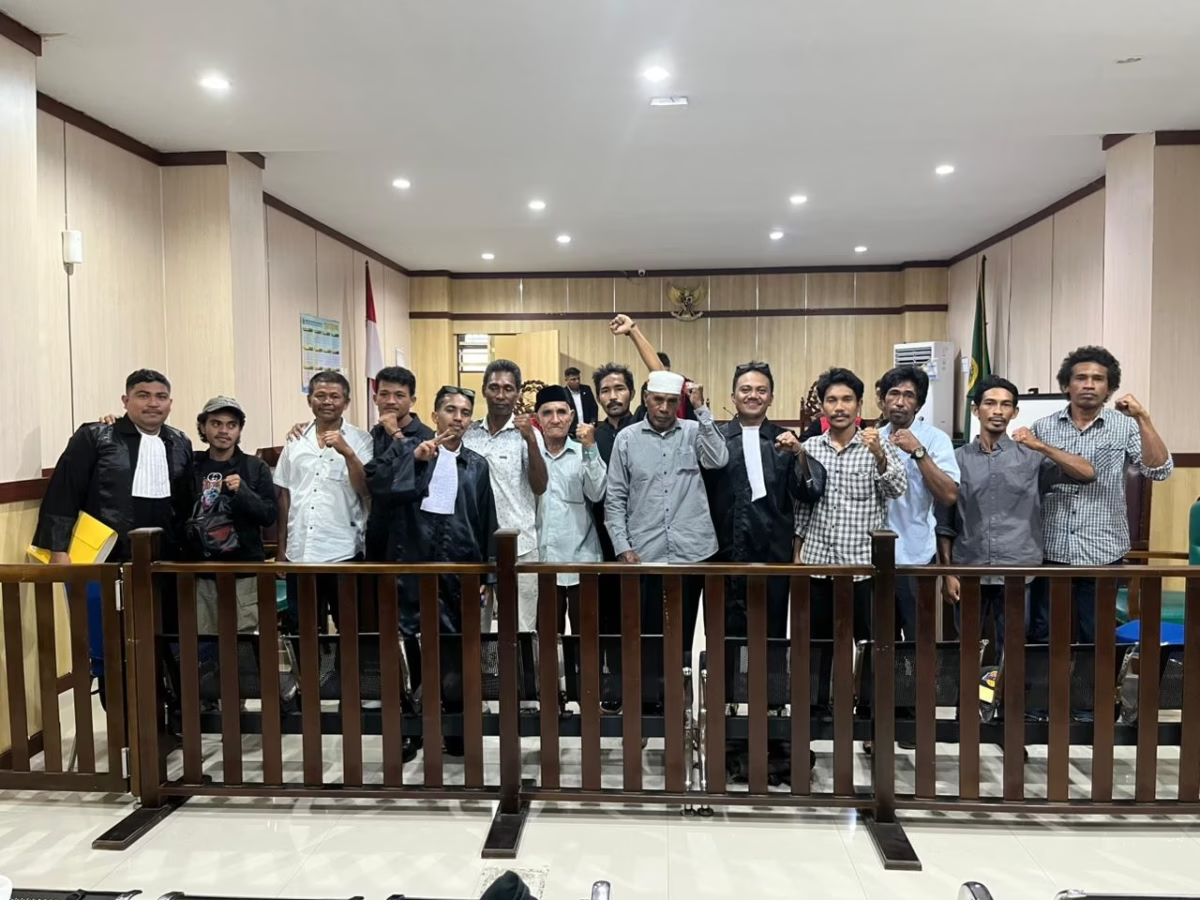
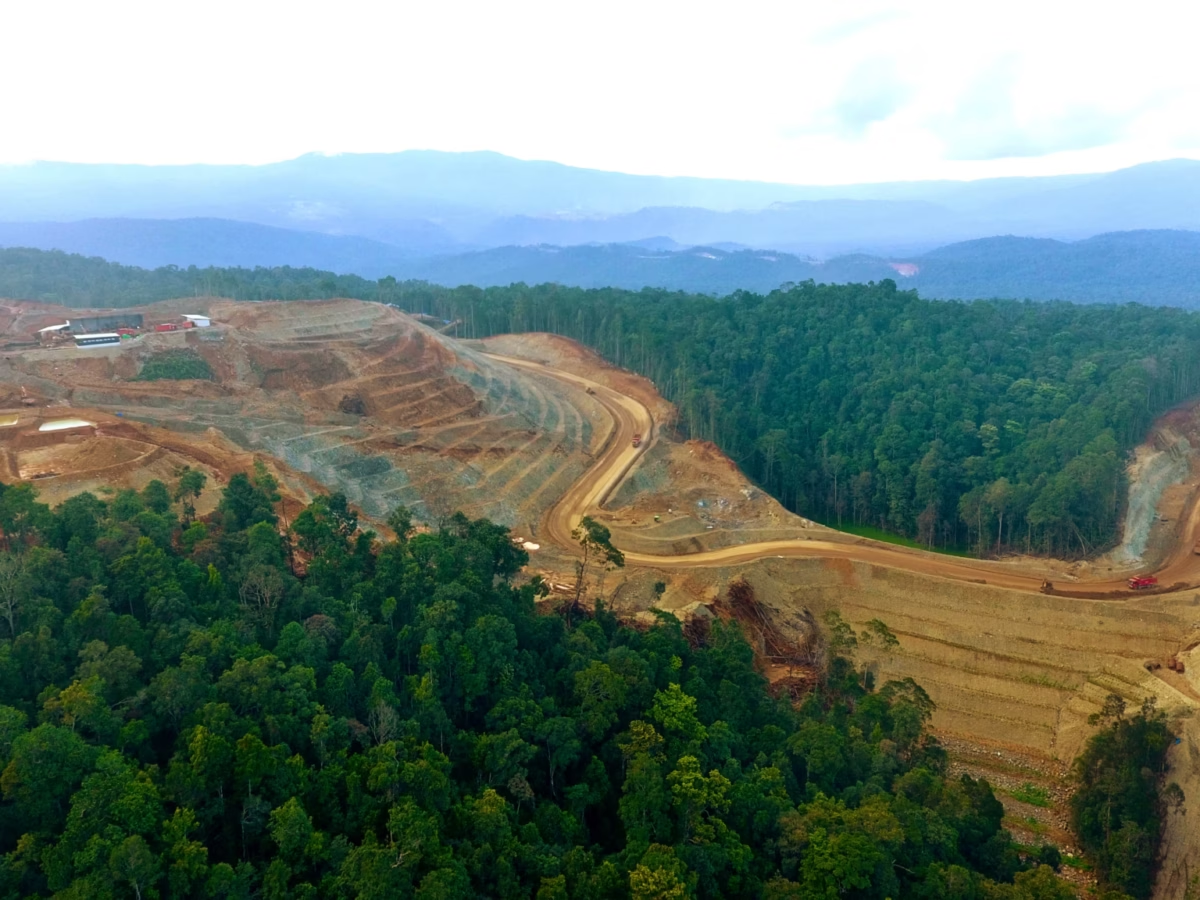
The criminalization of eleven members of the Maba Sangaji Indigenous community is a stark example of Strategic Lawsuits Against Public Participation (SLAPP). It reflects a calculated effort to silence grassroots resistance to forest destruction and river pollution linked to a nickel mining operation in North Maluku.